Highly Reliable Vacuum Chambers and Vacuum Structures for Large Scientific Facilities
Serving major scientific facilities such as advanced light sources, nuclear fusion, and space environment simulation, we provide high-cleanliness, high-precision, and high-reliability vacuum manufacturing solutions.
What Is a Large Scientific Facility?
Large scientific facilities are large-scale scientific research infrastructures built to support major national scientific goals. They are typically characterized by large scale, complex systems, a high degree of technological integration, and high operational precision. They serve a wide range of cutting-edge fields such as particle physics, advanced light sources, nuclear fusion, space science, and materials research, and are important platforms for conducting high-level basic research and validating key technologies.
In such facilities, a vacuum environment is often one of the fundamental conditions required to ensure experimental accuracy, beam stability, and reliable equipment operation. Different facilities and different sections have different requirements for vacuum levels, leak control, material stability, and cleanliness, which places high demands on the design and manufacturing capabilities of vacuum chambers and related structural components.
Why Do Large Scientific Facilities Need Vacuum Chambers?
In air, gas molecules, water vapor, particles, and organic contaminants continuously interfere with particle beams, light beams, and plasma processes, affecting experimental results and device stability. By establishing a high-vacuum or ultra-high-vacuum environment, external interference can be significantly reduced, providing cleaner, more stable, and more controllable operating conditions for major scientific experiments.
Reduce Residual Gas Interference
Reduce interactions between particle beams, light beams, plasma processes, and residual gas molecules to improve transmission stability and experimental repeatability.
Ensure a High-Precision Experimental Environment
Reduce the impact of water vapor, particles, and contaminants on optical systems, detection systems, and key functional components, and support high-precision measurement and experimental validation.
Support Long-Term Stable Operation
A stable vacuum environment is an important foundation for many large scientific facilities to achieve long-term continuous operation, and it also helps reduce the risk of unplanned downtime.
Protect Critical Core Components
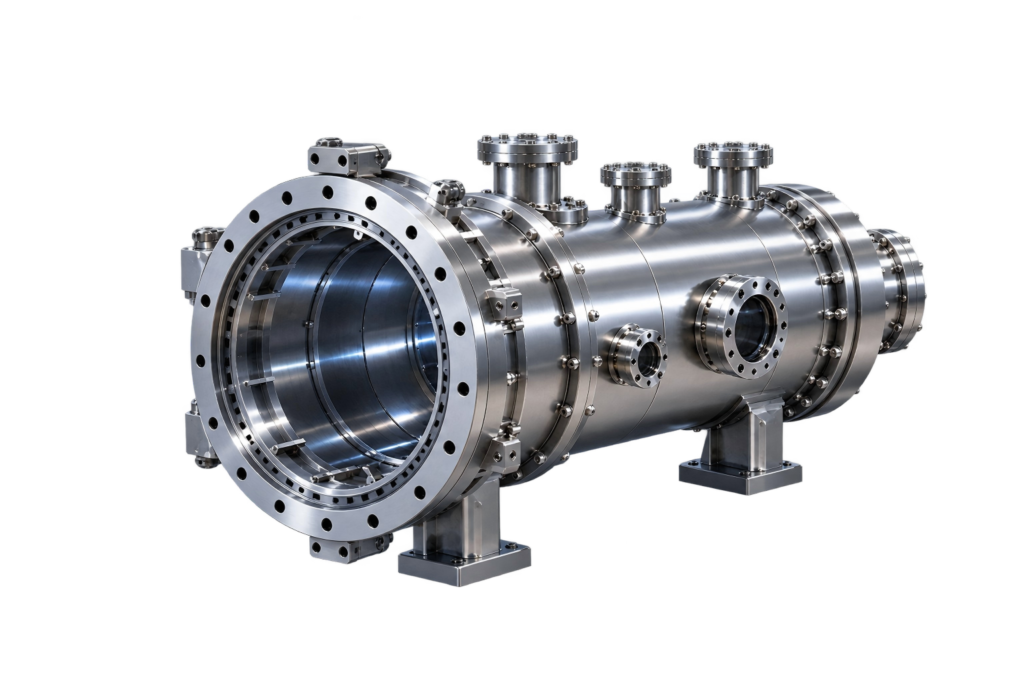
Vacuum chambers are not only sealed space carriers but also important structural foundations for installing and protecting beam components, optical components, detection components, and related interfaces.
Applications of Laiku Vacuum Chambers in Large Scientific Facilities
Relying on a complete R&D and manufacturing system, Laiku’s vacuum chambers and vacuum structural components have been widely used in many major scientific projects in China, covering multiple fields such as synchrotron radiation accelerators, high-power lasers, neutron and nuclear physics, aerospace environmental simulation, and nuclear fusion superconductivity, providing customized vacuum solutions for various scientific research facilities.
Synchrotron Radiation and Accelerator Facilities
We supply vacuum undulators, storage ring chambers, beamline chambers, and structural components for linear accelerators, serving projects such as high-energy synchrotron radiation sources and electron–positron colliders, and helping ensure stable electron beam transmission.
High-Power Laser Facilities
We provide picosecond terminal compression chambers, main amplifier clean chambers, and ultra-high-vacuum clean chambers to create a high-cleanliness vacuum operating environment for high-energy laser optical paths, ensuring the stable execution of high-power laser experiments.
Neutron and Nuclear Physics Facilities
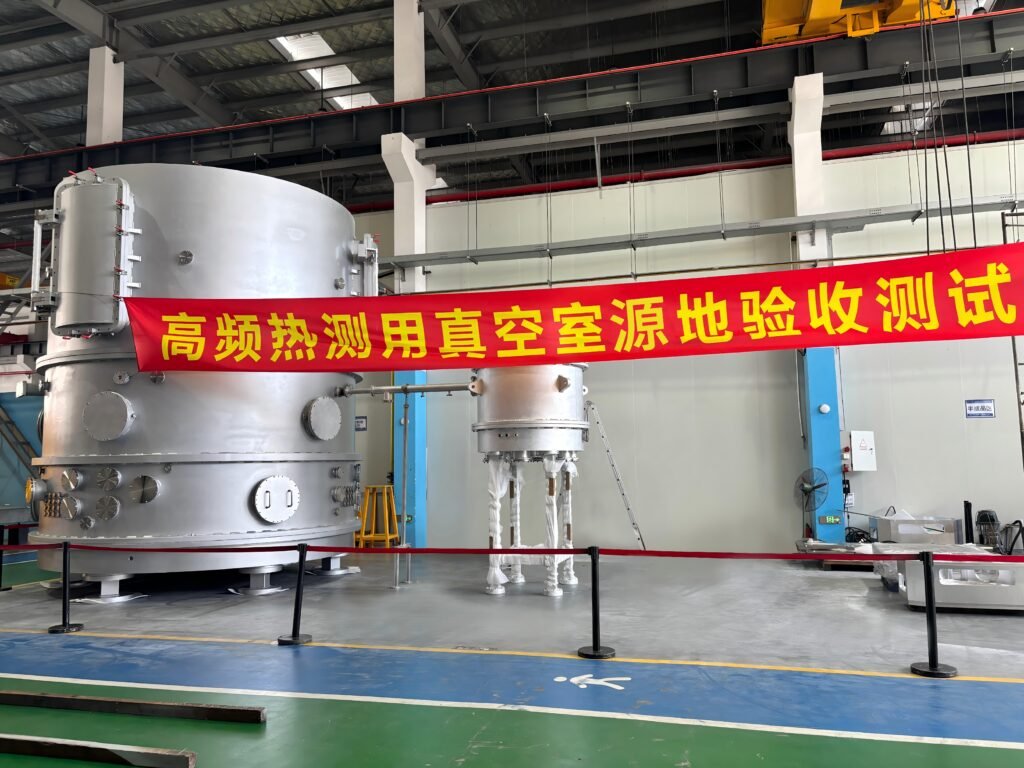
We undertake the manufacturing of vacuum chambers for cyclotron accelerator high-frequency thermal measurement systems and neutron scattering instruments, meeting the stringent requirements for high airtightness and low leakage rates in nuclear physics and neutron science experiments.
Space Environment Simulation Facilities
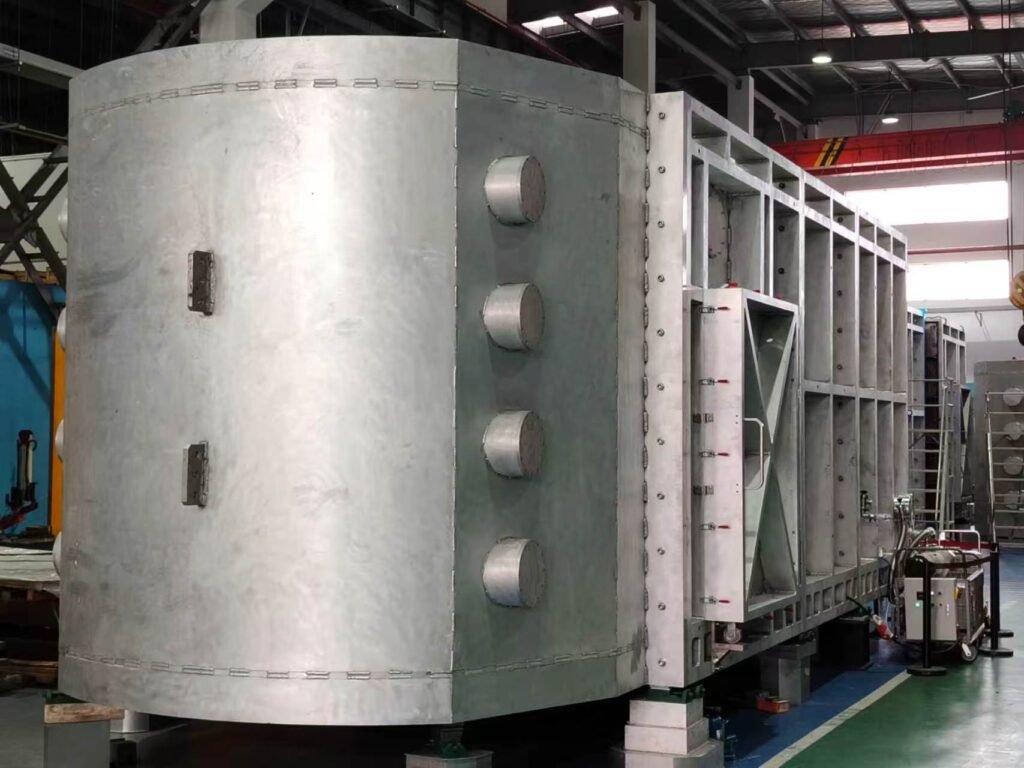
We develop large-scale horizontal environmental simulation system vessels and experimental platforms for space optical remote sensing cameras, capable of achieving combined high-vacuum, high-/low-temperature operating conditions for ground-based simulation and verification of spacecraft and components.
Nuclear Fusion and Superconducting Experimental Facilities
We customize various superconducting vacuum chambers and sealed pressure-bearing structural components, providing stable and reliable ultra-high-vacuum enclosures for plasma experiments and the operation of superconducting components.
Key Technical Challenges Facing Vacuum Chambers in Large Scientific Facilities
Technical Challenges | Requirements for Vacuum Chambers |
High Vacuum / Ultra-High Vacuum and Low Leakage Control
| Different facilities have significantly different requirements for vacuum levels and leakage rates. Key sections usually need to balance low outgassing, low leakage, and long-term stable operation, which places extremely high demands on welding quality, sealing structures, and leak detection capabilities.
|
High-Precision Manufacturing of Large Structures
| Vacuum chambers in large scientific facilities are often large in size, complex in structure, and equipped with numerous interfaces. Ensuring overall geometric accuracy while controlling assembly and fit-up errors places high demands on large-scale precision machining equipment and process planning.
|
Welding Deformation Control and Structural Stability
|
Vacuum chambers made of aluminum alloy and stainless steel are prone to deformation, stress concentration, and local precision deviation after welding. Controlling welding deformation while ensuring weld airtightness is a key challenge in the manufacturing process.
|
High Cleanliness and Low Outgassing Control
|
Some facilities are extremely sensitive to particulate residue, surface contamination, and material outgassing, requiring strict cleanliness control during surface treatment, cleaning, assembly, and packaging. |
Laiku’s Manufacturing and Delivery Capabilities for Large Scientific Facilities
High Vacuum and Low Leakage Control Capability
By establishing a comprehensive control system covering materials, welding, sealing, and leak detection, we can achieve ultra-high vacuum levels below 1 × 10⁻⁷ Pa. Through multi-stage leak detection and sealing structure optimization, we meet the stringent requirements for low leakage rates and long-term vacuum stability in large scientific facilities.
Large-Scale Precision Machining Capabilities
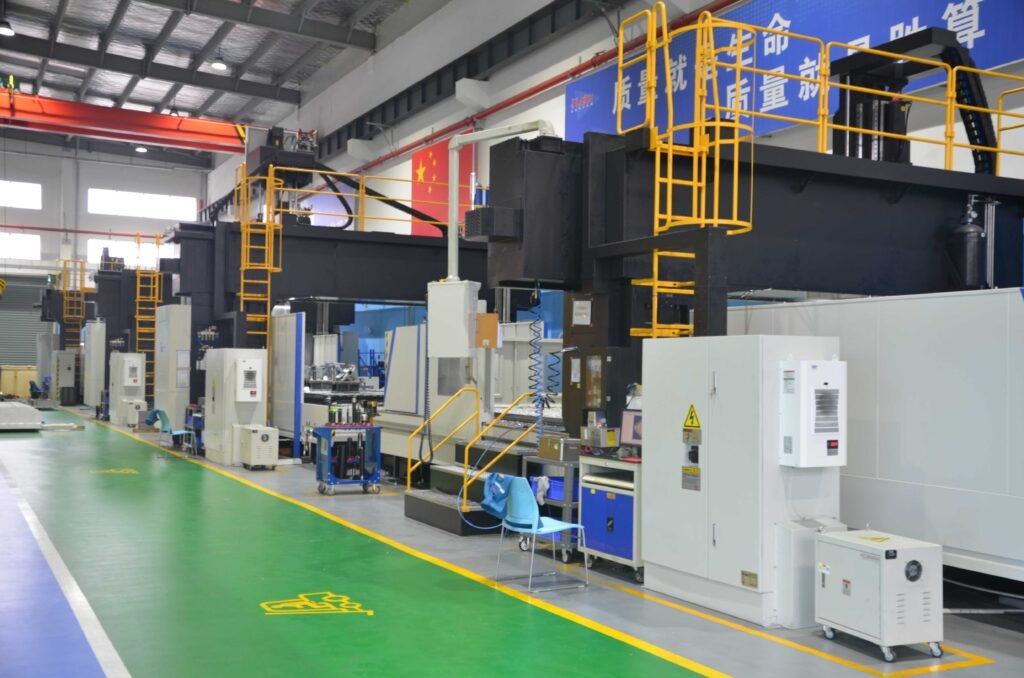
Equipped with multiple large-scale precision machining systems, we support the machining of large vacuum chambers and complex structural components, with a maximum machining size of 6500 mm × 4200 mm × 1800 mm. For large structural parts, we can achieve integrated machining, reducing errors caused by multiple clamping operations and tool transitions, and improving dimensional consistency and structural accuracy.
Vacuum Welding and Forming Capabilities
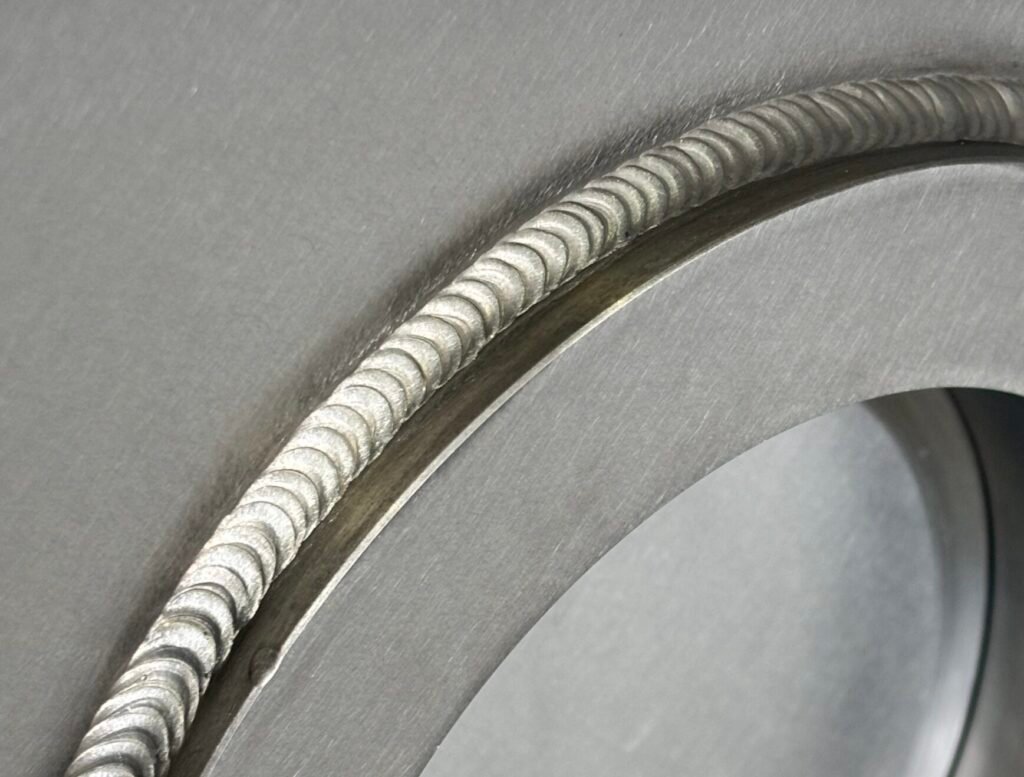
We are capable of applying common manufacturing processes for vacuum structural components, such as TIG welding and friction stir welding, and can develop suitable welding solutions based on materials, thicknesses, and structural configurations. For large and complex welded structures, we control welding quality and structural deformation through process qualification, post-weld stress relief, and finish machining.
Surface Treatment and Cleanliness Control Capabilities
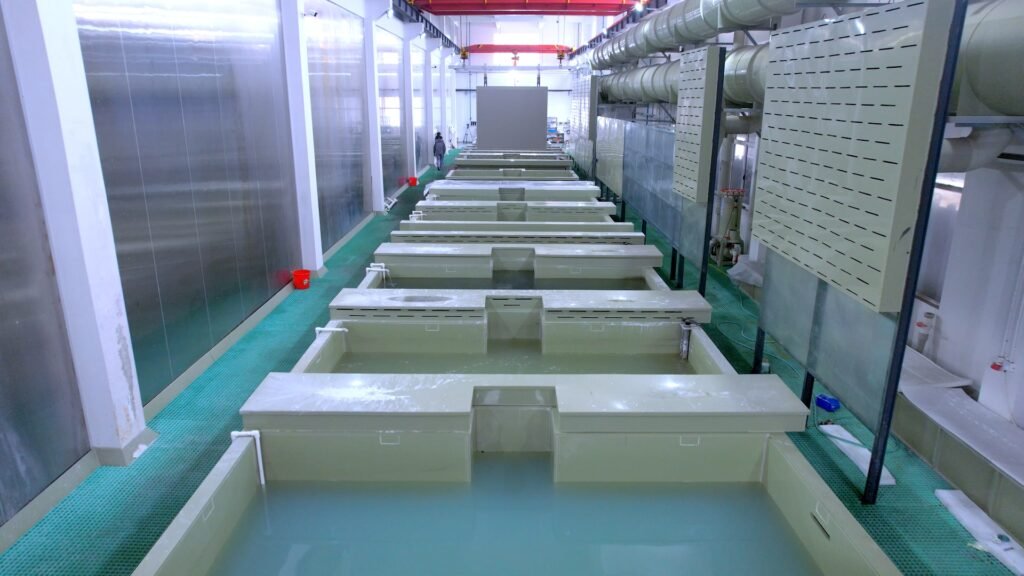
We possess comprehensive processing capabilities including anodizing, electropolishing, chemical cleaning, and electroless nickel plating, and can select appropriate processes according to different materials and operating environments. For high-cleanliness assembly requirements, we provide graded clean environments and standardized cleaning and assembly procedures to reduce the risk of particle residue and surface contamination.
Testing and Quality Control Capabilities
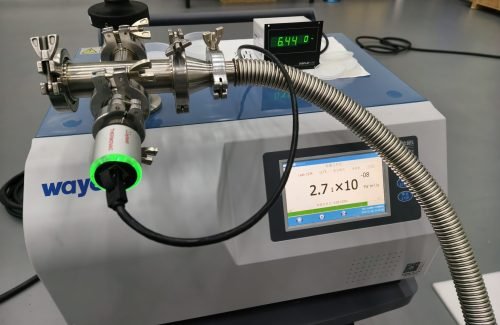
We can perform dimensional inspection, helium mass spectrometry leak detection, visual inspection, and related quality verification, while implementing full-process quality control for key components and final assembly to meet the delivery requirements of high-reliability vacuum products.
Qualifications and Team Support
We have established a relatively complete quality management system, and our team possesses relevant industry certifications and project support experience. The team has experience in vacuum structural component manufacturing, welding process implementation, precision machining, and project coordination, enabling us to support customized development and delivery for large scientific facility projects.
What our customers say

Mark (Canada)
Vacuum Systems Engineer
We were impressed by the vacuum chambers provided by Laiku in terms of welding quality, cleanliness control, and delivery responsiveness, all of which met the requirements of scientific research facilities for stable operation and reliable delivery.

Amy(UK)
International Sales Engineer
Manufacturing and precision control of thin-walled vacuum structural components is extremely challenging. Laiku demonstrated expertise in dimensional consistency, welding quality, and project coordination, effectively supporting the progress of the project.

Daniel(France)
Vacuum Testing Engineer
In applications requiring high cleanliness and low leakage rates, the custom vacuum chambers delivered by Laiku have demonstrated stable performance, helping us shorten the system commissioning cycle and improve overall delivery efficiency.
FAQs
Why do large scientific facilities require vacuum chambers instead of conducting experiments directly in air?
Gas molecules, water vapor, and particles in air can interfere with particle beams, light beams, plasma processes, and precision detection, leading to scattering, absorption, contamination, and reduced stability. Vacuum chambers significantly reduce the impact of these factors on experiments and equipment operation by creating a controlled environment.
Is the inside of a vacuum chamber a “perfect vacuum” with absolutely no molecules?
No. Absolute vacuum does not exist in real engineering practice. High vacuum or ultra-high vacuum refers to reducing residual gas molecules to a level sufficient to meet the operating and experimental requirements of the facility.
Why do ultra-high-vacuum chambers usually need to be baked and degassed after processing?
Baking can accelerate the desorption of adsorbed gases from the inner surfaces of the chamber and, together with the pumping process, reduce the outgassing rate of the material, thereby helping the system reach the target vacuum level more stably.
Why are weld quality requirements for vacuum chambers so strict?
Defects such as micropores, cracks, or lack of fusion in welds can create leakage paths, directly affecting vacuum performance and long-term stability. Therefore, vacuum chambers used in large scientific facilities typically require strict control of the welding process and post-weld verification such as helium mass spectrometry leak detection.
What are the consequences if a vacuum chamber leaks?
A leak can lead to vacuum degradation, fluctuations in experimental conditions, and shortened beam lifetime. In severe cases, it may cause experimental interruption, component contamination, increased risk of discharge, or even trigger an interlock shutdown of the facility.
Are vacuum chambers and beamlines the same concept?
A beamline vacuum channel can be regarded as a typical structural form within a vacuum chamber system. In a broader sense, vacuum chambers cover a much wider range, including experimental target chambers, detector chambers, beamline chambers, environmental simulation vessels, and many other structures.
What methods are commonly used for leak detection in vacuum chambers for large scientific facilities?
Helium mass spectrometry (HMS) is one of the most common leak detection methods. It is highly sensitive and suitable for detecting very small leaks in high-vacuum and ultra-high-vacuum structural components.
Is a higher vacuum level always better?
Not necessarily. Vacuum requirements need to match specific scientific objectives, operating conditions, and cost control considerations. Excessively high vacuum levels increase manufacturing, pumping, and maintenance costs; meeting actual application requirements is the more reasonable approach.