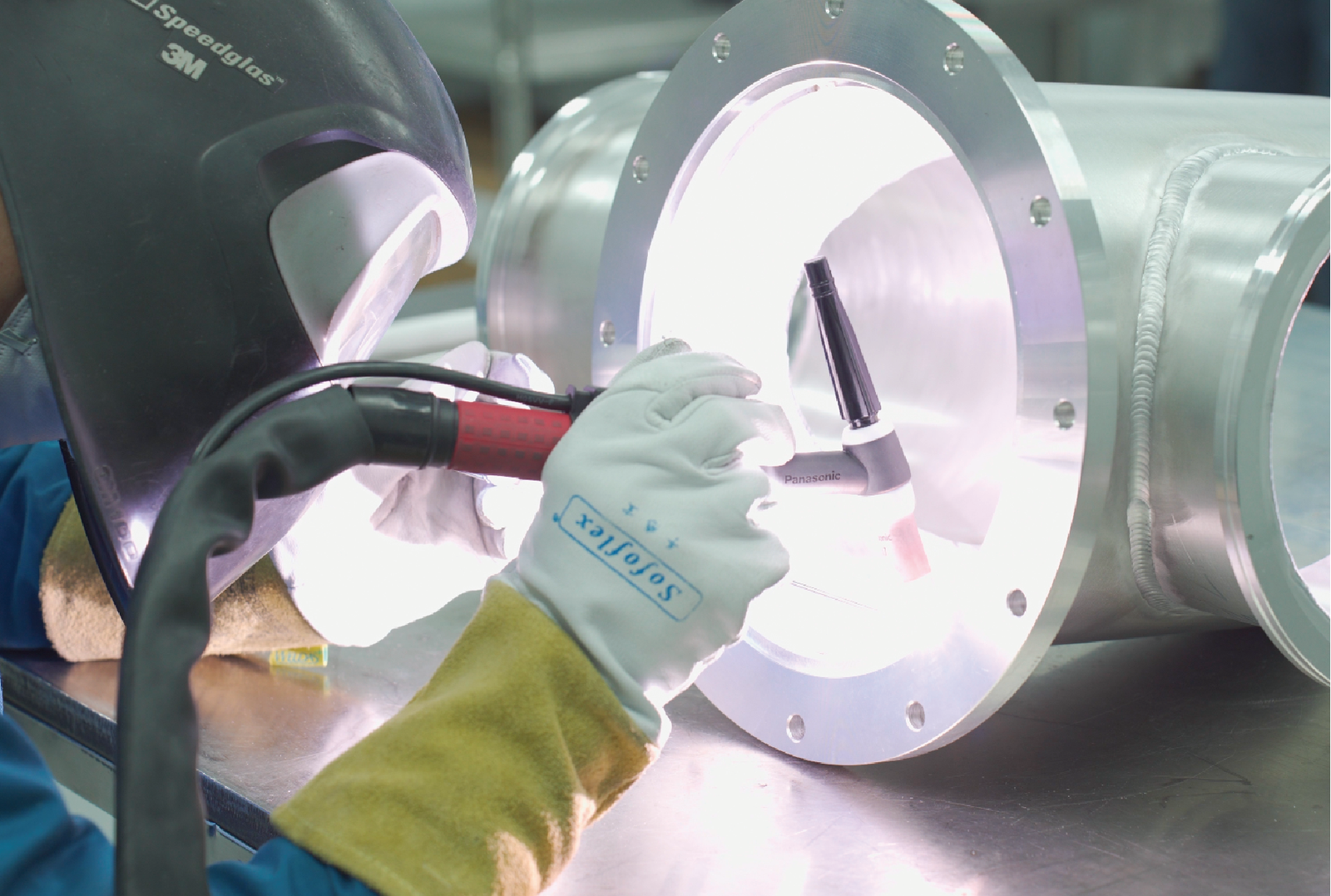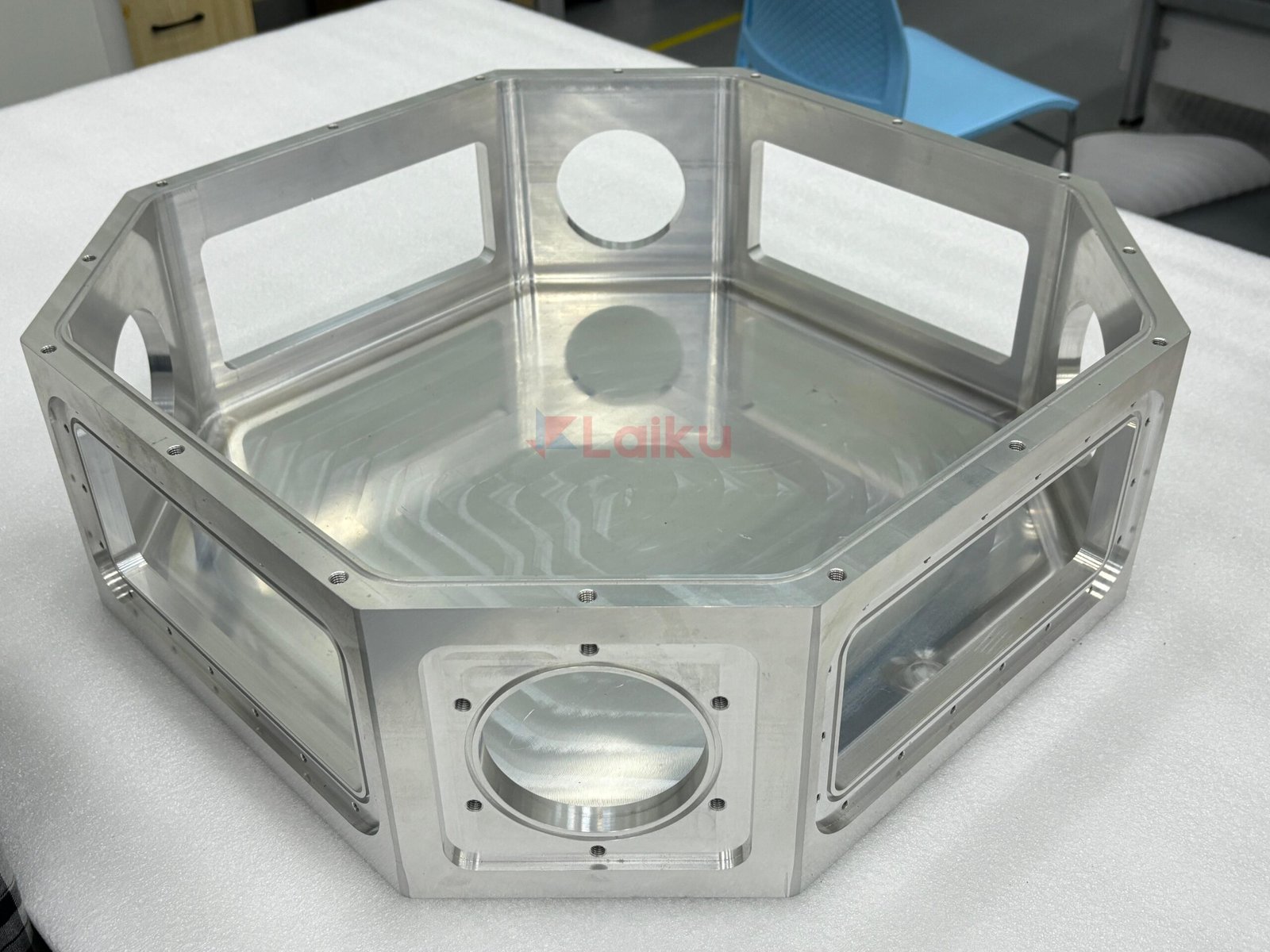

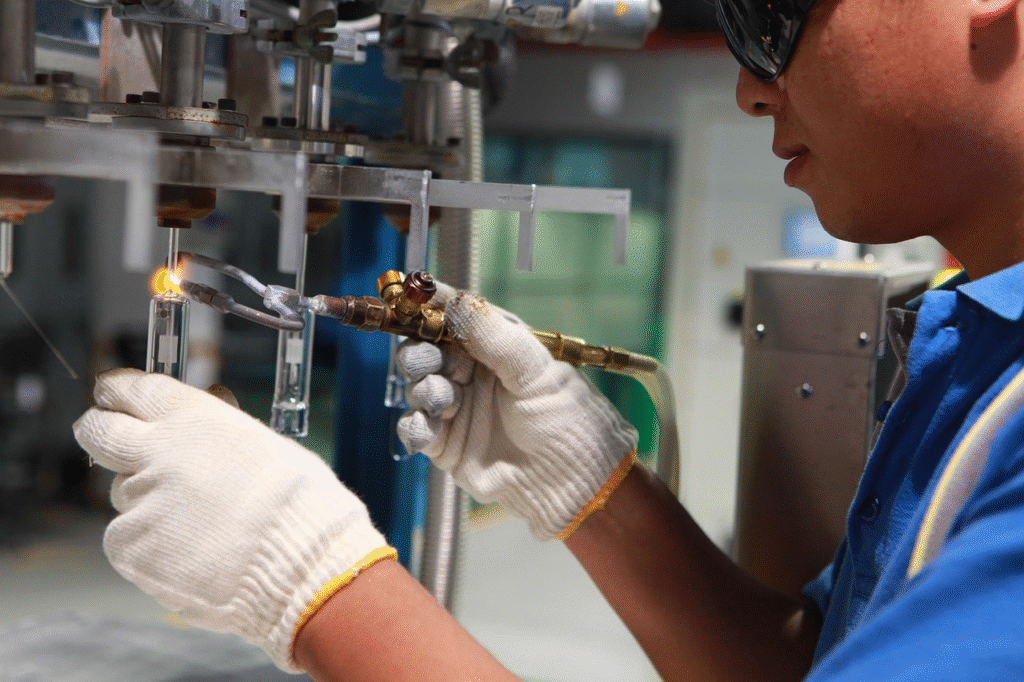
If you've ever wondered how they weld those tiny components inside your smartphone or seal that pacemaker to keep it safe inside a human body, you're looking at laser welding. It's one of those technologies that quietly powers the modern world, joining metals with a precision that feels almost like science fiction.
1. What Is Laser Welding?
Laser welding is a method of joining materials, mostly metals, using a focused beam of light (laser). The beam heats the material so intensely that it melts and fuses together as it cools.
It’s commonly used where accuracy, clean finishes, and strong joints really matter, like in cars, electronics, and medical tools.
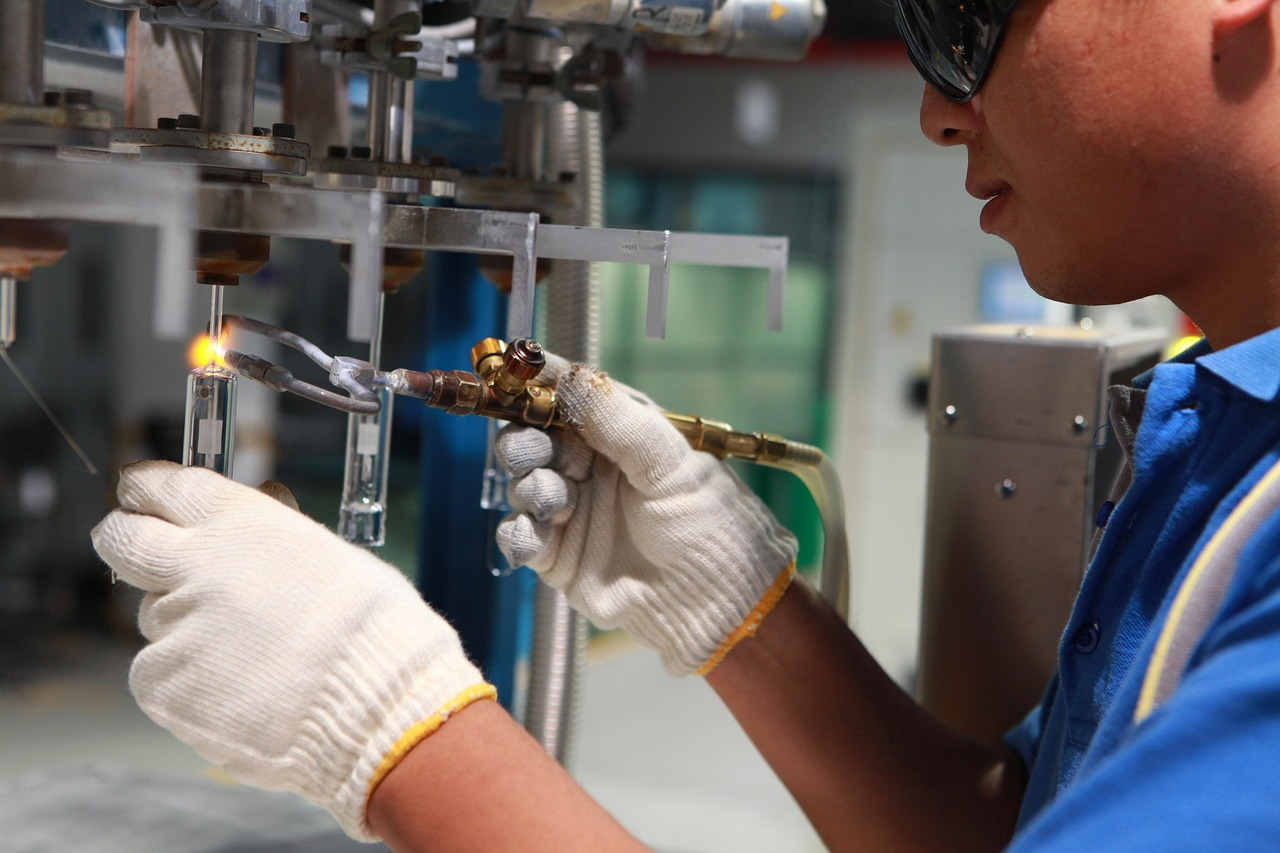
Image Source: Pixabay(https://pixabay.com/photos/electric-welding-factory-563804/ )
2. How Laser Welding Works
In simple terms, a laser beam is pointed at the joint between two pieces of metal. The heat melts the material, and when it cools, it forms a solid weld.
Welding Modes: Conduction vs. Keyhole
Depending on how much power you crank up, laser welding works in two different ways:
-
Conduction Mode: This is the gentler approach. You use just enough power to melt the surface, and the heat slowly soaks into the material. The result is a smooth, attractive weld that's wider than it is deep. It's perfect for thin materials or when appearance really matters.
-
Keyhole Mode: When you need to go deep, you turn up the power. The beam is so intense that it actually vaporizes the metal, drilling a tiny, deep hole called a "keyhole" that's surrounded by molten metal. As you move the beam, that hole travels through the material, creating a weld that's narrow but can go surprisingly deep. This is how you weld thick plates in a single pass.
Types of Lasers Used in Modern Welding
| Laser Type | Wavelength | Key Features | Advantages | Typical Applications |
|---|---|---|---|---|
| Fiber Laser | 1.06 µm | Solid-state, high beam quality, compact | High precision, efficient, low maintenance | Automotive, electronics, medical devices |
| CO₂ Laser | 10.6 µm | Gas laser, high power, larger footprint | Deep penetration, suitable for thick metals | Aerospace, heavy fabrication, steel cutting |
| Diode Laser | 0.8–1.0 µm | Semiconductor-based, compact | Efficient, lightweight, hybrid use | Automotive, electronics, thin metal welding |
| Nd: YAG Laser | 1.064 µm | Solid-state, pulsed or continuous wave | High precision, excellent for micro-welding | Jewelry, medical devices, aerospace |
| Disk Laser | 1.03 µm | Solid-state, high power, excellent beam quality | High speed, precise, low maintenance | Automotive, shipbuilding, heavy industry |
3. Advantages of Laser Welding
-
Incredible Precision: We're talking about welding hair-thin wires or microscopic components. If you need accuracy, a laser delivers.
-
Minimal Heat Damage: Because the energy is so focused, the area around the weld barely gets hot. That means less warping, less shrinkage, and no weakened zones around your joint.
-
It's Fast: Laser welding can move at speeds that would make a TIG welder's head spin. More speed means more parts per hour.
-
Deep Penetration: In keyhole mode, you can weld thick materials in one go without having to make multiple passes.
-
No Contact, No Wear: The beam never touches the part, so there's no tool to wear out or replace.
-
Perfect for Automation: Once you program the path, a laser can run the same weld 24/7 without getting tired.

Image Source: Pixabay( https://pixabay.com/photos/small-factory-welding-craftsman-645614/ )
4. Disadvantages / Limitations
- Machines are expensive
- Needs precise alignment of parts
- Struggles with gaps between materials
- Reflective metals like aluminum can be tricky
- Requires proper safety setup
5. Applications of Laser Welding in Different Industries
Laser welding is used across many industries because it offers speed, accuracy, and strong joints. Its flexibility makes it suitable for both small delicate parts and large industrial components.
-
Automotive Industry
Used for body panels, gear components, and battery systems. The laser welding process ensures strong joints with minimal distortion, which is critical for safety and performance. Many manufacturers rely on automated laser welding for high-volume production lines. -
Aerospace Industry
Ideal for engine parts and structural components where high precision welding is essential. The accuracy of laser beam welding helps maintain the strict tolerances required in aircraft manufacturing. -
Electronics Industry
Used for micro-components, circuit parts, and sensors. Precision laser welding allows manufacturers to join very small parts without damaging surrounding materials. -
Medical Devices
Surgical tools, implants, and stainless-steel components are often made using metal welding with a laser due to its cleanliness and precision. -
Jewelry and Fine Components
Perfect for delicate work where appearance matters. Laser welding technology enables clean, nearly invisible joints. -
Heavy Industry and Machinery
In shipbuilding and large equipment manufacturing, industrial laser welding is used for strong and durable joints, especially in thick materials. -
Energy Sector
Used in pipelines, batteries, and power systems. The reliability of modern welding techniques like laser welding ensures long-lasting performance.
6. Laser Welding vs Traditional Welding Methods
| Factor | Laser Welding | Traditional Welding (MIG/TIG/Arc) |
|---|---|---|
| Weld Strength | Equal or higher (can match base material) | High, but depends more on operator skill |
| Heat-Affected Zone | Very small (less material weakening) | Larger HAZ (can reduce surrounding strength) |
| Penetration | Deep, narrow, and precise | Wider, less controlled |
| Distortion | Minimal due to low heat input | Higher, especially in thin materials |
| Consistency | Highly consistent (automated process) | Varies with skill and technique |
| Defects (Porosity, etc.) | Lower risk | Higher risk if not done properly |
| Best for Strength | Thin to medium materials, precision parts | Thick materials, heavy structural applications |
| Joint Fit-Up Tolerance | Requires tight, precise joints | More forgiving with gaps |
| Overall Performance | Superior in controlled, high-precision environments | Reliable and strong for general use |
7. Safety Measures in Laser Welding
- Use proper laser welding safety equipment, including certified laser safety goggles and protective clothing
- Install laser safety shields and enclosures to prevent accidental beam exposure
- Ensure effective ventilation and fume extraction systems to control hazardous welding fumes
- Maintain correct machine calibration and preventive maintenance for safe operation
- Train operators in laser welding safety procedures and risk management
- Use automated shut-off systems and emergency stops to prevent accidents
Conclusion
Laser welding brings together precision, strength, and reliability, making it perfect for modern industries like aerospace, medical, electronics, and automotive. With clean, consistent welds and minimal distortion, it ensures your projects not only meet but exceed expectations.
Don’t settle for anything less—partner with Laiku today for expert laser welding solutions you can trust, and see your projects come to life with precision and perfection.
FAQs
Q: What are ideal materials for laser welding?
A: Stainless steel, aluminum, titanium, and other alloys with good thermal properties are ideal, especially in thin to medium thickness applications.
Q: Are there any common defects in laser welds that affect strength?
A: Yes—porosity, cracking, or lack of fusion can reduce strength if process parameters are not optimized.
Q: Can laser welding handle thick materials effectively?
A: Yes, high-power systems and multiple passes make it effective for thick materials, though it’s most efficient for thinner sections.
Q: How does wobble welding improve the strength of laser welds?
A: Wobble welding improves strength by distributing heat evenly, enhancing fusion, and reducing defects like porosity and cracking.
Q: Do you trust laser welding for complex projects?
A: Yes—laser welding is highly reliable for complex, precision-based projects when properly controlled and automated.