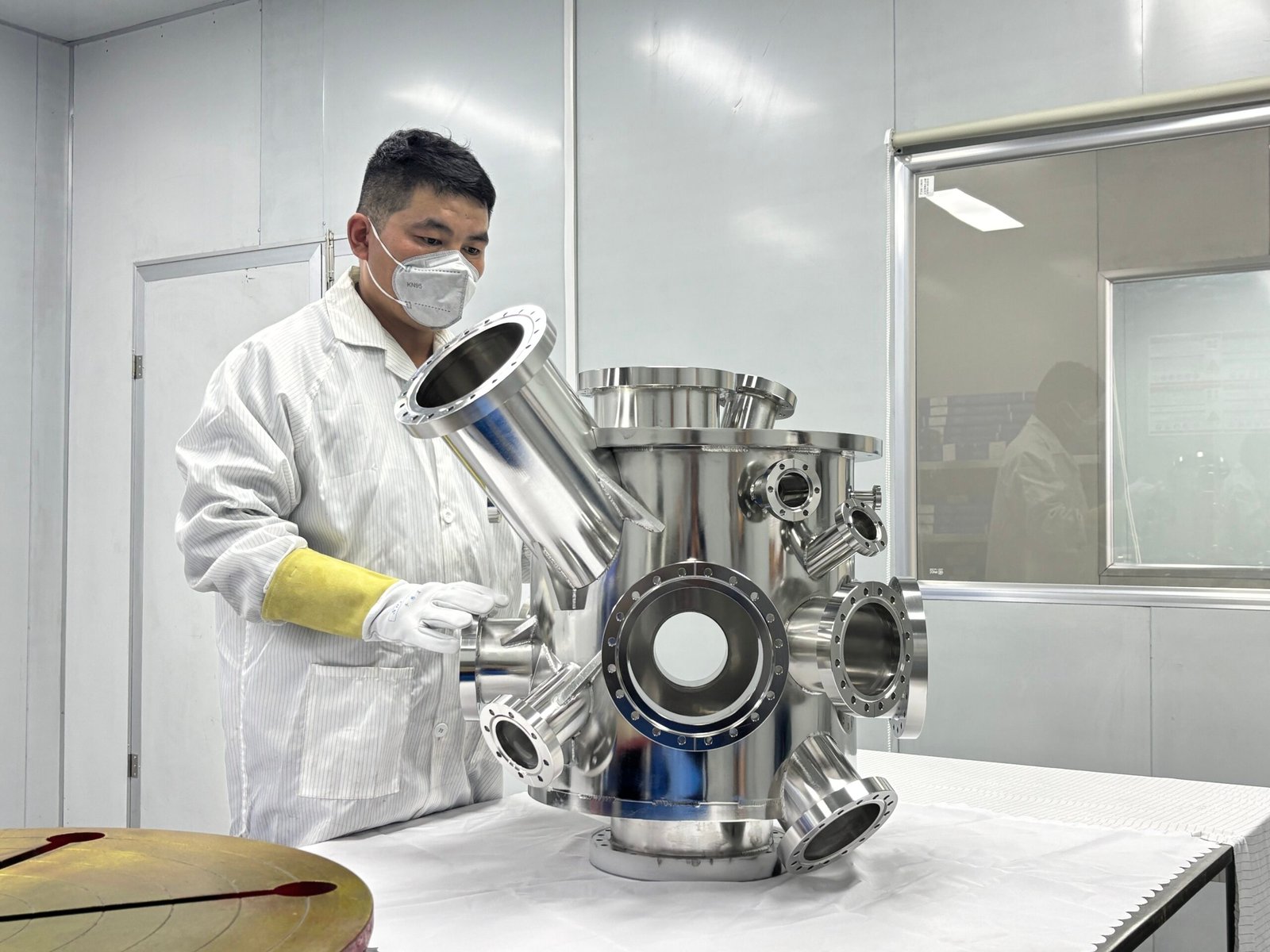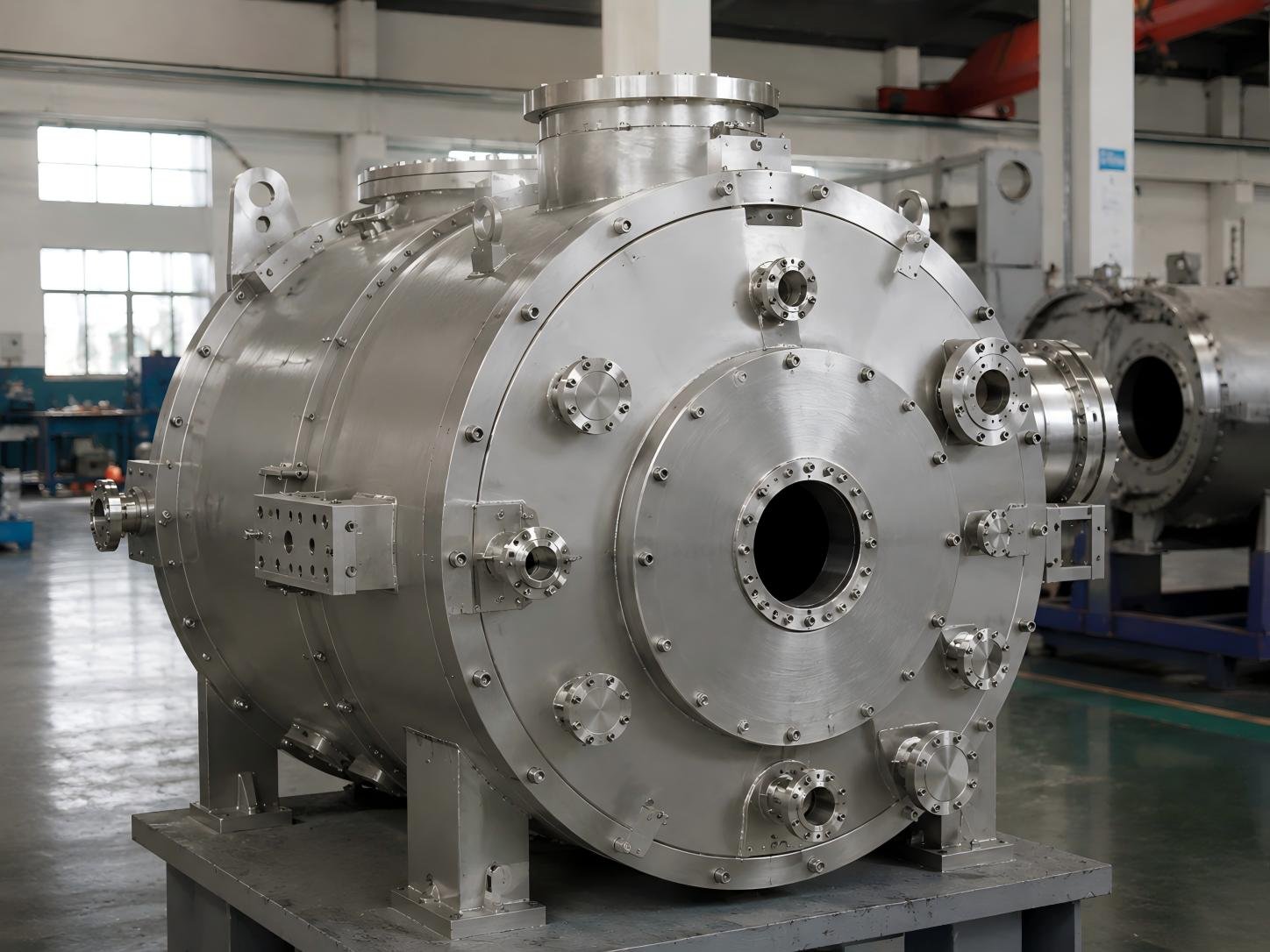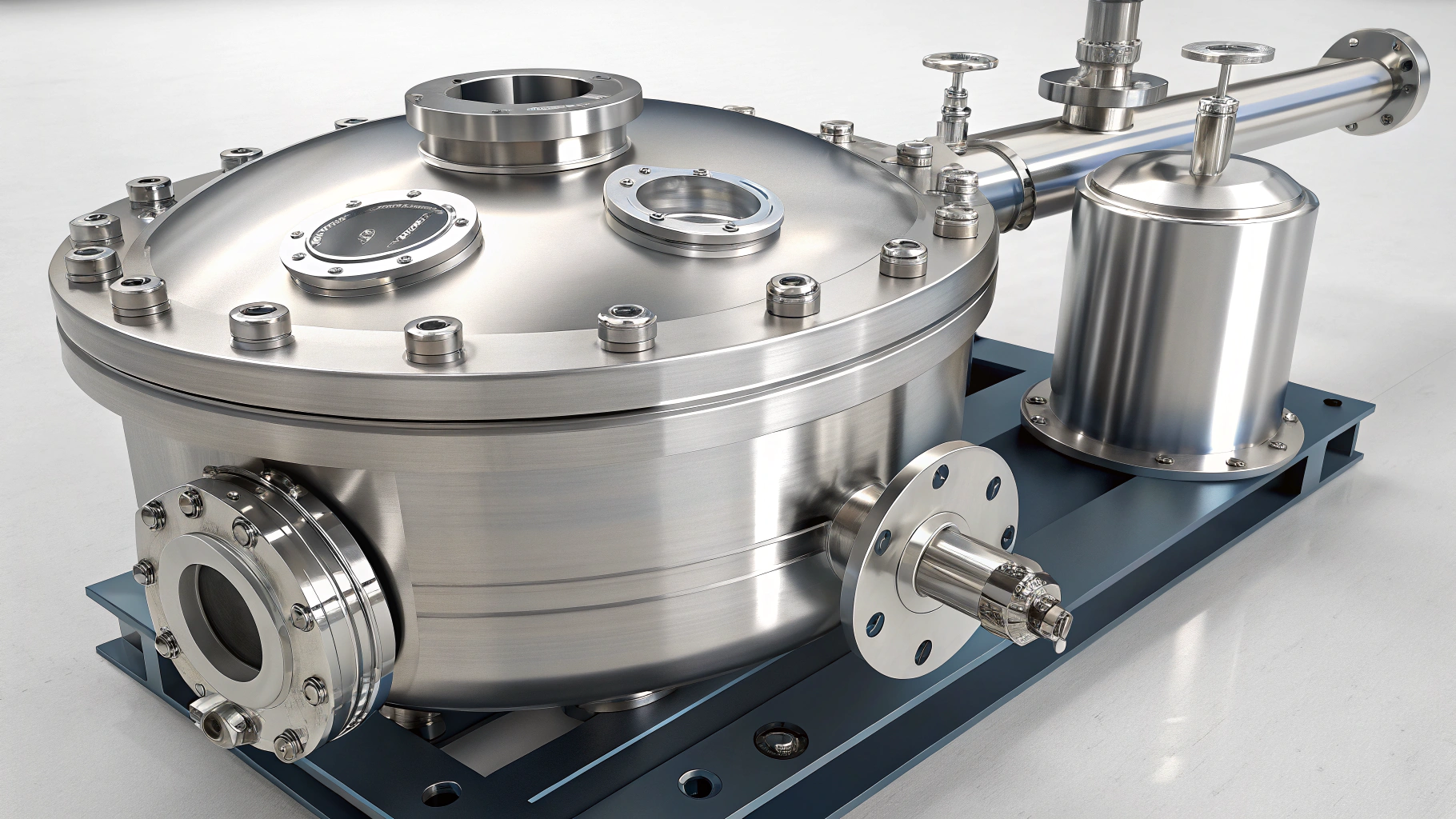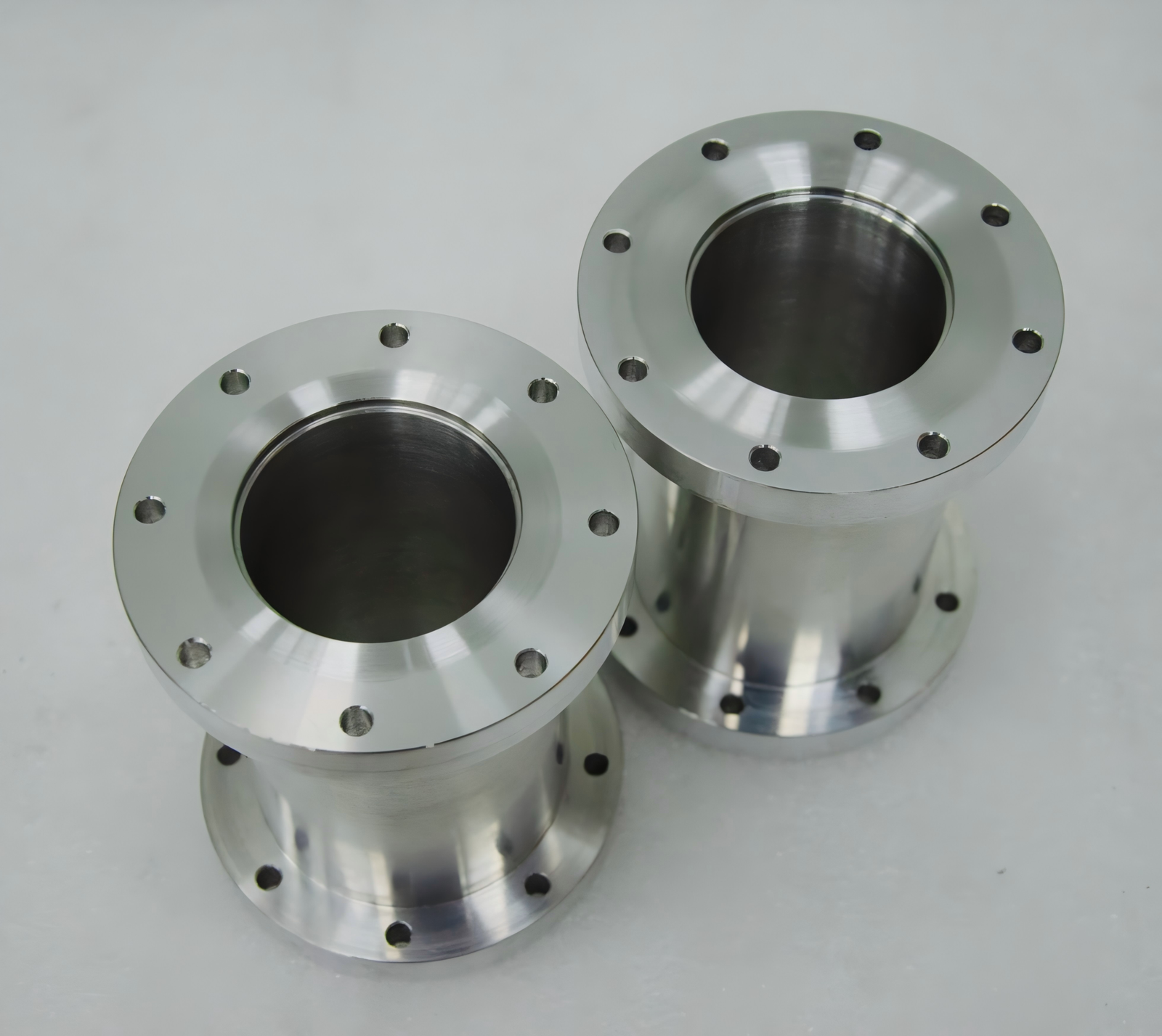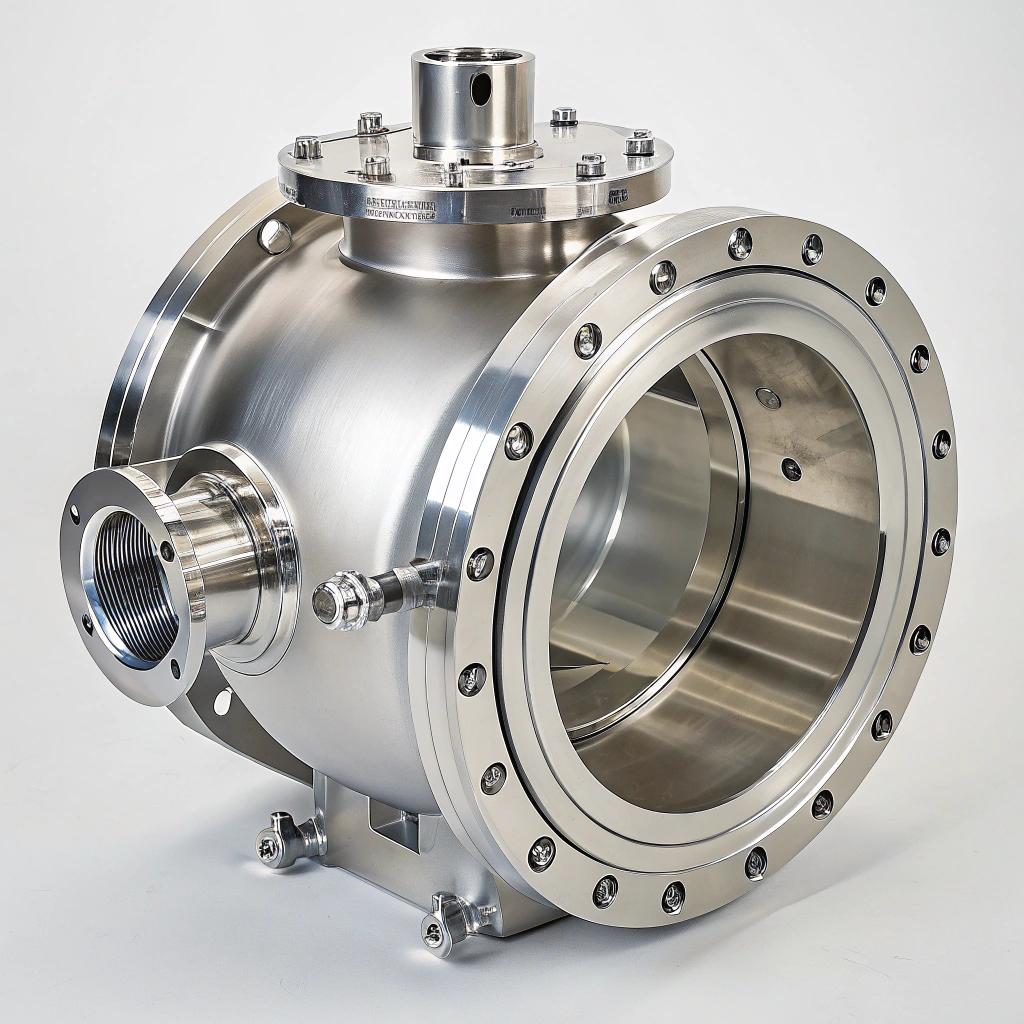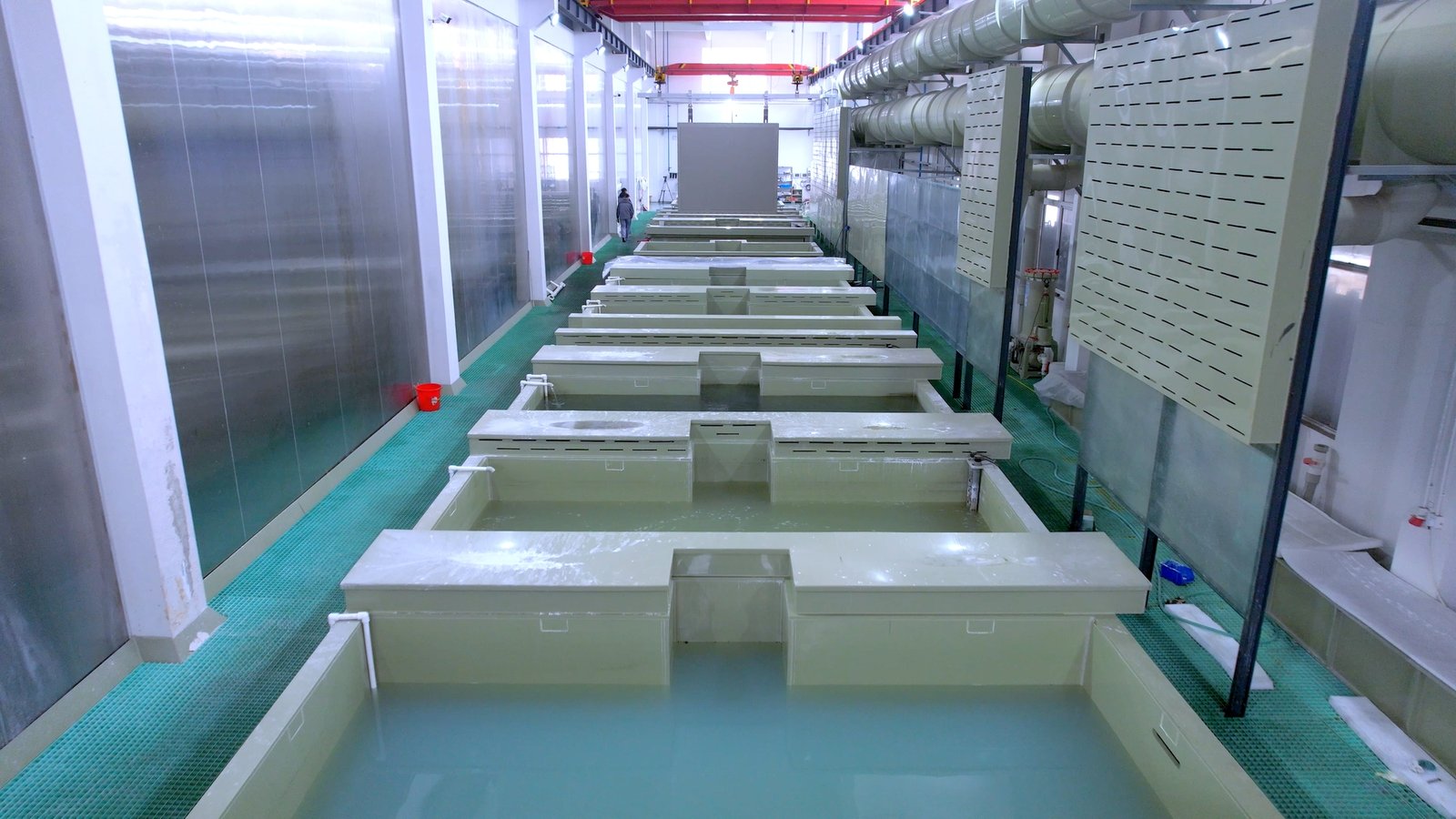

Choosing a vacuum chamber construction method is an engineering decision. A welded chamber may suit a large system, while a monolithic machined chamber may fit a compact design with tight control. The choice also affects leak testing, cleaning, and service life.
The chamber must work with the full vacuum setup for demanding systems. Welded vacuum chambers, monolithic machined vacuum chambers, and custom vacuum chambers each suit different equipment needs. Laiku supports chamber manufacturing for semiconductor, photovoltaic, coating, and research applications.
What Is a Welded Vacuum Chamber?
A welded vacuum chamber joins separate metal sections through controlled welding. The parts may be cut, formed, or machined before they are assembled and welded into the final chamber. Welding gives manufacturers more freedom with chamber size and shape.
Welding is especially useful for large structures. Making a very large chamber from one solid block can require a huge amount of material and machining time. A welded design can use several manageable sections instead. Heat from welding can affect chamber geometry, so the process needs careful control.
Vacuum chamber welding also needs close inspection. Micropores, cracks, or incomplete fusion can create leak paths. These defects can cause pressure loss and process problems for high-vacuum systems.
Laiku describes weld quality and leak rate as key concerns in semiconductor chamber manufacturing. Its semiconductor vacuum chamber capabilities include leak detection and cleanliness controls.
Where Welded Construction Works Well
Welded construction makes sense for chambers that are too large for practical one-piece machining. It also works well for complex shapes that would waste large amounts of material if carved from a solid block.
Large photovoltaic and scientific systems can also benefit from this approach. Laiku supports large machining and welding work, with manufacturing equipment for chambers reaching 6.5 m × 4.2 m × 1.8 m. Its large scientific facility capabilities show how large chamber projects can use controlled welding, machining, and leak testing together.
What Is a Monolithic Machined Vacuum Chamber?
A monolithic machined vacuum chamber is produced from one solid piece of material. CNC machines remove material until the required outer shape, internal cavity, ports, and mounting features are formed.
This approach can provide strong control over internal geometry. Fewer joints also mean fewer weld zones that need inspection and post-processing. That can simplify some parts of production, especially for smaller chambers with demanding dimensional requirements.
However, one-piece machining has limits. A large block of stainless steel or aluminum can be expensive and difficult to machine. Deep internal cavities may also require specialized tools and careful machining strategies. Material removal can add time and cost when the design is large.
Where Monolithic Construction Works Well
Monolithic machining is a good fit for chamber designs that can be produced within available machine capacity. It is useful when the internal features have tight dimensional requirements, and the design can be reached effectively with CNC tooling.
Laiku lists CNC machining as part of its vacuum chamber manufacturing process and supports aluminum, stainless steel, and titanium chambers. Its CNC machining and vacuum chamber manufacturing capabilities are suited to vacuum equipment.
Welded vs Monolithic Machined Vacuum Chambers: Key Differences
The right construction method depends on what the chamber must do. Size, geometry, vacuum level, material, cleanliness, and production volume all affect the choice. A simple chamber can often be machined as one piece. A large structure may need several welded sections.
Vacuum Integrity and Leak Risk
A monolithic chamber has fewer welded joints, which can reduce the number of areas that require weld inspection. It does not remove the need for leak testing, though. Seals, ports, flanges, and fittings can still create leakage paths.
A welded chamber places greater focus on weld quality. Proper joint preparation, controlled heat input, cleaning, and inspection are important parts of production. Laiku uses helium mass spectrometry for vacuum verification. Its vacuum chamber leak testing process covers the testing work used to check sealed components.
Geometry and Dimensional Control
Monolithic machining can provide direct control over features that are cut from one piece. This can be useful for chambers with close dimensional tolerances or carefully positioned internal components.
Welding introduces heat into the material, so distortion must be controlled during fabrication. The effect depends on the material, wall thickness, joint design, and welding process. Proper fixturing and inspection help keep the finished chamber within its required dimensions.
Cost and Manufacturing Practicality
Cost is rarely decided by machining time alone. Material price, material waste, machine capacity, tooling, welding, finishing, inspection, and labor all affect the final figure.
A monolithic design can require substantial material removal. That may work well for a smaller chamber but become costly for a large structure. Welding can reduce the size of individual parts and make large construction more practical. Welding adds joint preparation, inspection, and finishing work.
Cleanliness and Surface Requirements
Internal cleanliness matters in high-vacuum equipment. Surface condition can affect trapped contaminants, outgassing, and cleaning requirements. Monolithic machining can reduce the number of welded areas inside the chamber.
A welded chamber can still meet demanding cleanliness requirements when the joints and internal surfaces receive proper treatment. Laiku also provides surface treatment and clean assembly as part of its manufacturing process.
Which Vacuum Chamber Construction Should You Choose?
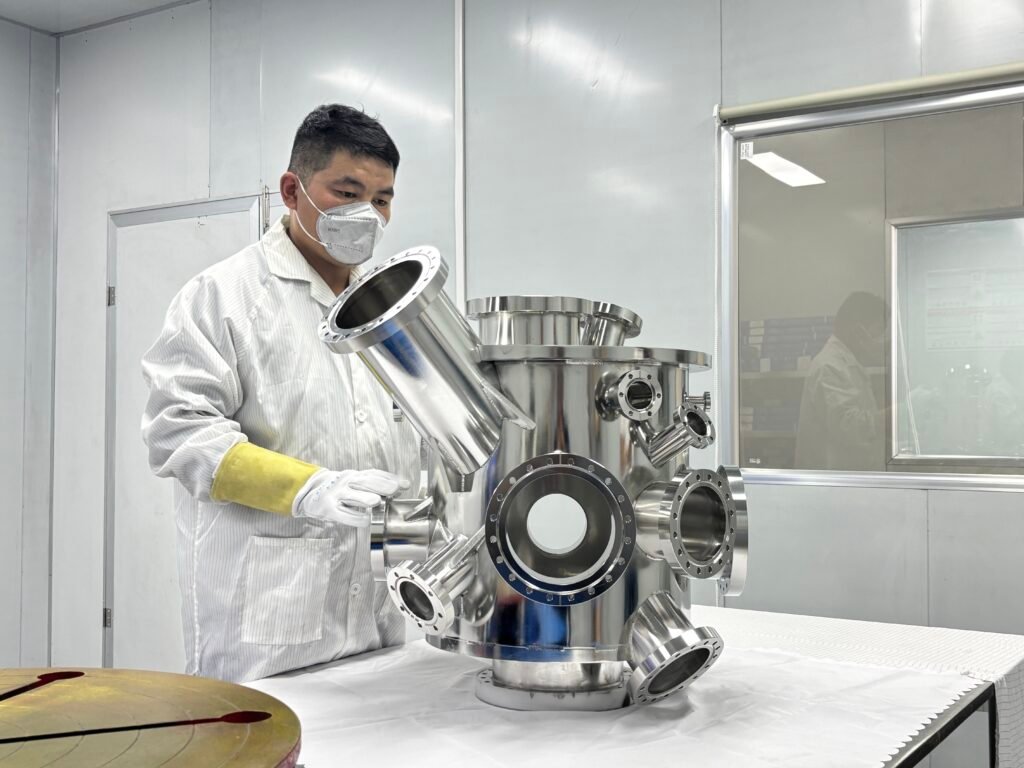
The right chamber construction depends on the equipment, vacuum level, size, geometry, and manufacturing limits. A welded design can suit large or complex structures, while monolithic machining may work better for smaller precision chambers. The choice should also account for material, cleanliness, inspection needs, production time, and overall project cost.
Choose a Welded Chamber When
A welded chamber can be a practical choice for projects where size or geometry makes one-piece machining difficult. The construction method provides flexibility during fabrication while supporting large chamber designs. Several factors should be checked before selecting this route for a specific vacuum application.
- Large chamber size: Welding can make large structures easier to manufacture and assemble.
- Complex geometry: Separate sections can simplify the fabrication of complicated chamber shapes.
- Material efficiency: Individual components may reduce the amount of material that must be removed during machining.
- Manufacturing flexibility: Welding can support chamber designs that exceed practical one-piece machining limits.
Choose a Monolithic Machined Chamber When
A monolithic machined chamber can suit designs that fit within available CNC machining capacity. One-piece construction can reduce the number of welded areas inside the chamber. It may also provide strong control over internal features where dimensional accuracy is important for the equipment.
- Suitable chamber dimensions: The complete chamber can be produced within available machining capacity.
- Tight dimensional requirements: CNC machining can provide direct control over important internal features.
- Fewer joints: One-piece construction reduces the number of welded areas that require inspection.
- Machining access: The internal geometry can be reached effectively with suitable CNC tooling.
Consider a Hybrid Approach
A hybrid chamber combines machining and welding where each process offers a practical advantage. This can work well for complex equipment with both precision features and large structural sections. The final design should assign each manufacturing process to the areas where it provides the most practical result.
- Machined precision areas: Critical internal features can be produced through CNC machining.
- Welded structural sections: Larger sections can be fabricated and joined through controlled welding.
- Reduced machining effort: The approach can limit unnecessary material removal from large blocks.
- Flexible fabrication: Different manufacturing methods can be combined based on chamber geometry and requirements.
How Vacuum Requirements Influence the Decision
Vacuum requirements should be established before the construction method is fixed. High-vacuum and ultra-high-vacuum systems need careful attention to leakage, outgassing, surface condition, and material selection.
For semiconductor equipment, the requirements can be especially strict. Laiku states that semiconductor chamber welding must control leakage, material outgassing, and weld quality. Its manufacturing process also includes helium leak detection and cleanliness verification. These controls matter because small leaks or contaminants can affect process stability.
For more design detail, Laiku's vacuum chamber design guide discusses materials, geometry, pumping, and leak testing in semiconductor equipment.
Final Takeaway: Match Chamber Construction to the Application
There is no single winner between welded vacuum chambers and monolithic machined vacuum chambers. Large structures often benefit from welding, while suitable smaller designs may gain from one-piece machining. The required vacuum level, chamber geometry, material, cleanliness, and production limits should guide the decision.
For demanding high-vacuum chamber and ultra-high-vacuum chamber projects, manufacturing quality matters as much as the basic construction method.
Laiku provides vacuum chamber machining, welding, surface treatment, clean assembly, and inspection under one manufacturing process. For a project that requires vacuum chamber design support, its team can help match the chamber construction to the application.