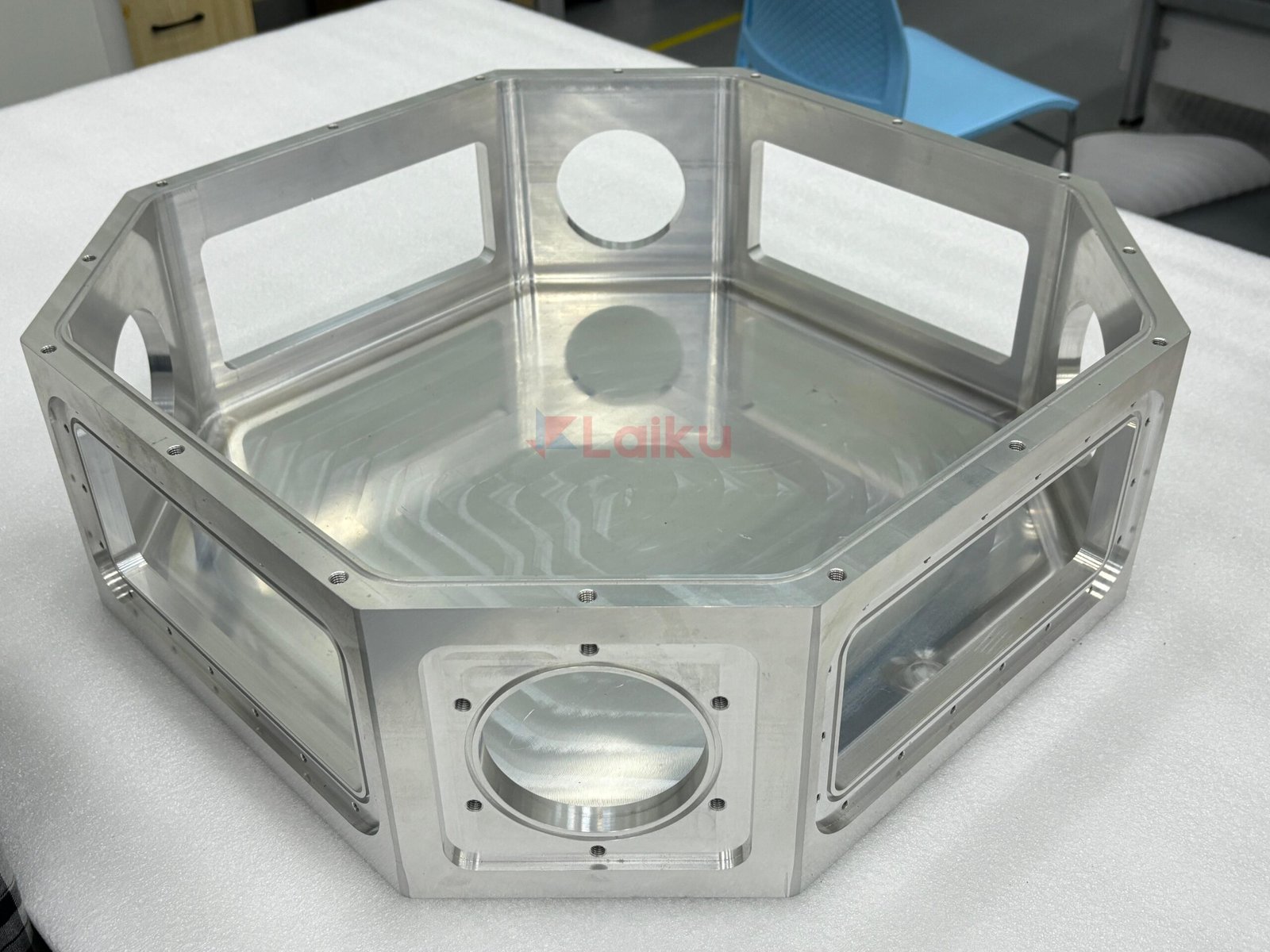

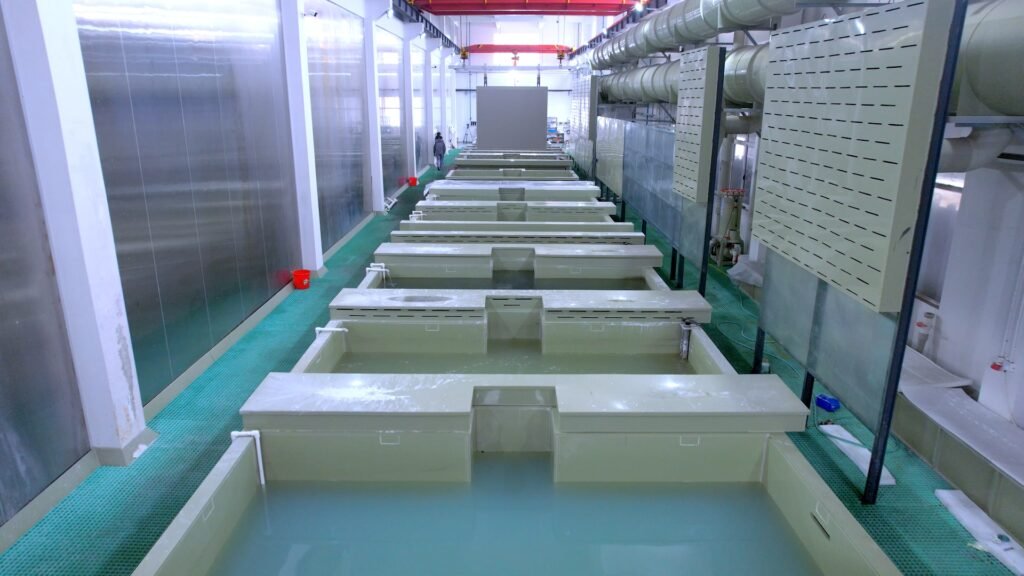
Over-specifying vacuum chamber surface finish specifications, or applying the same strict requirement to the entire chamber, can quickly raise your costs. Achieving tight Ra targets needs extra machining, manual polishing, custom electropolishing electrodes, complex flange masking, and additional inspection steps.
To achieve high vacuum performances without unnecessary costs, you should specify surface finishes only where they are functionally needed. But this should be done carefully, since surface condition directly affects outgassing, pump-down time, and cleanliness of vacuum systems. This is your practical guide to define clear, zone-specific surface specifications without adding unnecessary costs.
Why Vacuum Chamber Surface Finish Specifications Matter
The internal walls of a vacuum chamber directly interact with the vacuum. Rough surfaces contain peaks, valleys, micro-cracks, and other irregularities that can hold more contaminants, moisture, and particles. Therefore, controlling surface roughness Ra and proper treatment are important to:
- Minimize vacuum chamber outgassing.
- Control pump-down time by reducing the amount of adsorbed gases that must be removed.
- Maintain cleanliness inside the chamber.
- Maintain process stability, repeatability, and product quality.
- Maintain proper sealing by reducing defects that could create leak paths.
- Maintain corrosion and chemical resistance.
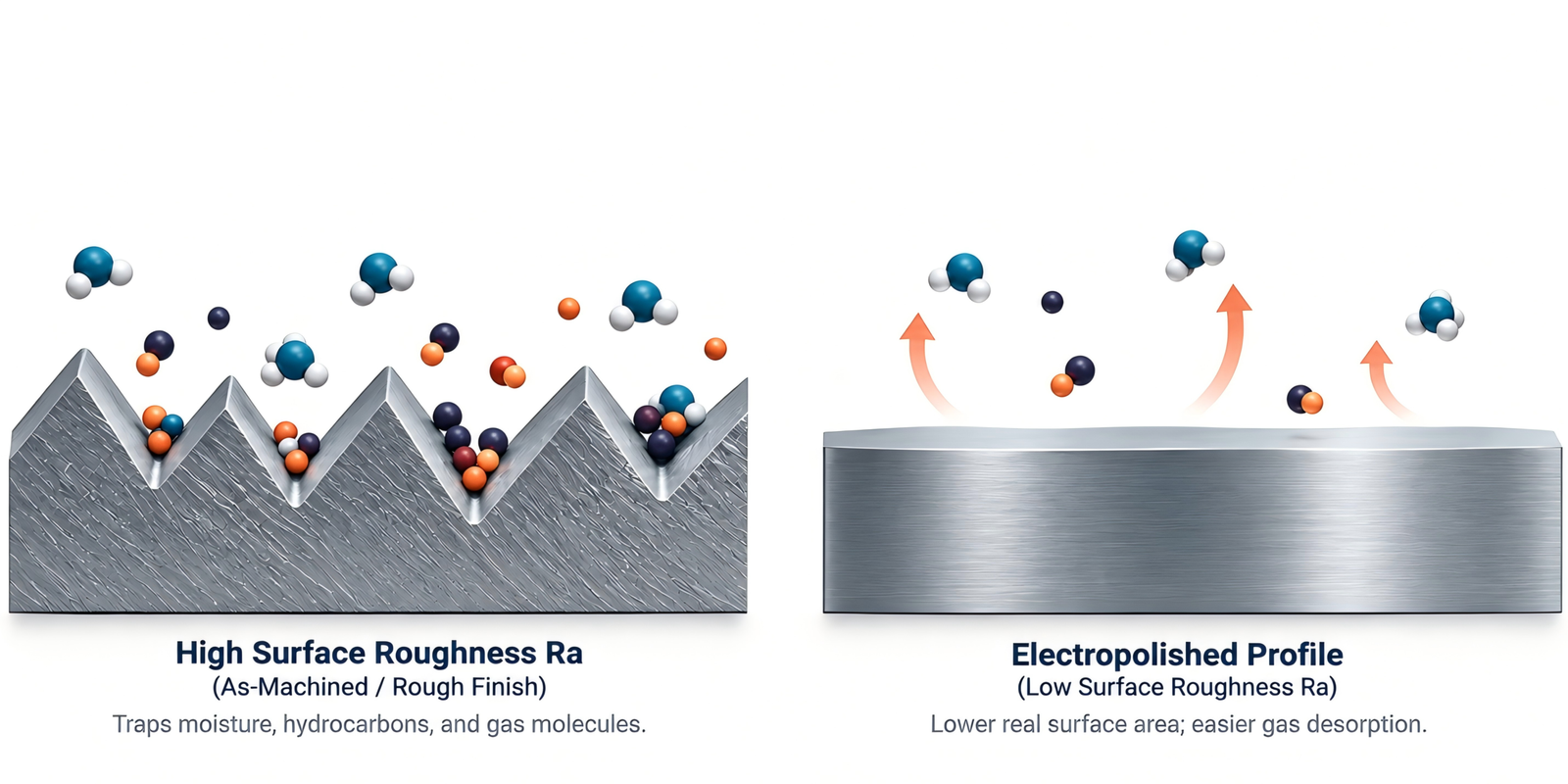
Figure 1: As-Machined vs. Electropolished Vacuum Chamber Surface - A Schematic of the Microscopic View
However, these requirements are not equally necessary for all areas of a chamber. For example, sealing surfaces near flanges may require a slightly tighter roughness to ensure proper sealing. Surface requirements also vary from one chamber to another depending on the vacuum level, process conditions, material, and application. That is why specifying the same surface roughness Ra value for the entire assembly can unnecessarily increase manufacturing cost.
How to Correctly Specify a Vacuum Chamber Surface Specification
A clear vacuum chamber surface finish specification should define four main items:
- Surface roughness Ra with clear units, usually in micrometers (μm) or microinches (μin).
- Required process sequence that should be followed to achieve the specified surface finish.
- Surface location and zoning exclusions, clearly stating which surfaces require each treatment. Separate internal vacuum-facing walls, external non-vacuum surfaces, weld heat-affected zones, tapped or blind holes, flanges, and the sealing surface finish.
- Acceptance criteria and inspection methods, such as visual cleanliness inspection, residual gas analysis (RGA), or post-treatment helium leak testing.
Common Vacuum Chamber Surface Treatments and Achievable Properties
In addition to reducing surface roughness, there may be other properties you want to achieve through surface treatment, such as corrosion resistance, chemical resistance, insulation, or improved cleanliness. You should choose the most suitable surface treatment(s) by considering all of your requirements, rather than spending on multiple processes unnecessarily.
Mechanical Polishing
Mechanical polishing removes surface peaks by cutting, grinding, or abrasive finishing. We can generally achieve roughness levels around Ra 0.4–1.6 μm (16–63 μin), depending on the starting surface, material, and geometry.
Basic polishing is usually simple and cheap, but it requires a lot of manual labor for large chambers and complex geometries. Also, mechanical polishing cannot realistically achieve the higher cleanliness level of electropolishing. This is more useful as a preparation step before passivation or electropolishing to remove larger machining marks or weld irregularities.
Bead Blasting & Sandblasting
In blasting, glass or sand beads are blasted onto the surface at high pressure. This method can remove scale, discoloration, and minor surface irregularities to a fair level. Bead blasting is usually gentler than sand blasting and creates smooth matte finishes of around Ra 1.6–3.2 μm (63–125 μin).
Bead blasting is one of the most economical finishing methods, but it does not produce a surface as smooth as mechanical polishing. We recommend it mainly for external chamber surfaces and other non-critical areas to save the cost of fine polishing. Since bead blasting impacts the chamber walls at high velocity, suppliers should always mask and protect critical sealing surfaces and other precision-machined features during the process.
Passivation & Pickling
Pickling uses an acid solution to remove weld scale, oxides, free iron, and a thin surface layer. You can specify this after welding or fabrication to clean the stainless steel surface. Passivation focuses more on restoring or strengthening the stainless steel's protective chromium-rich oxide layer and thereby improving corrosion resistance. It does not smooth the surface.
Both pickling and passivation generally follow the original surface roughness, because their main purpose is chemical cleaning rather than mechanical smoothing. The cost is usually moderate, but it can increase for large chambers and complex geometries. You may still need to follow these treatments with mechanical polishing or electropolishing if you need a lower surface roughness.
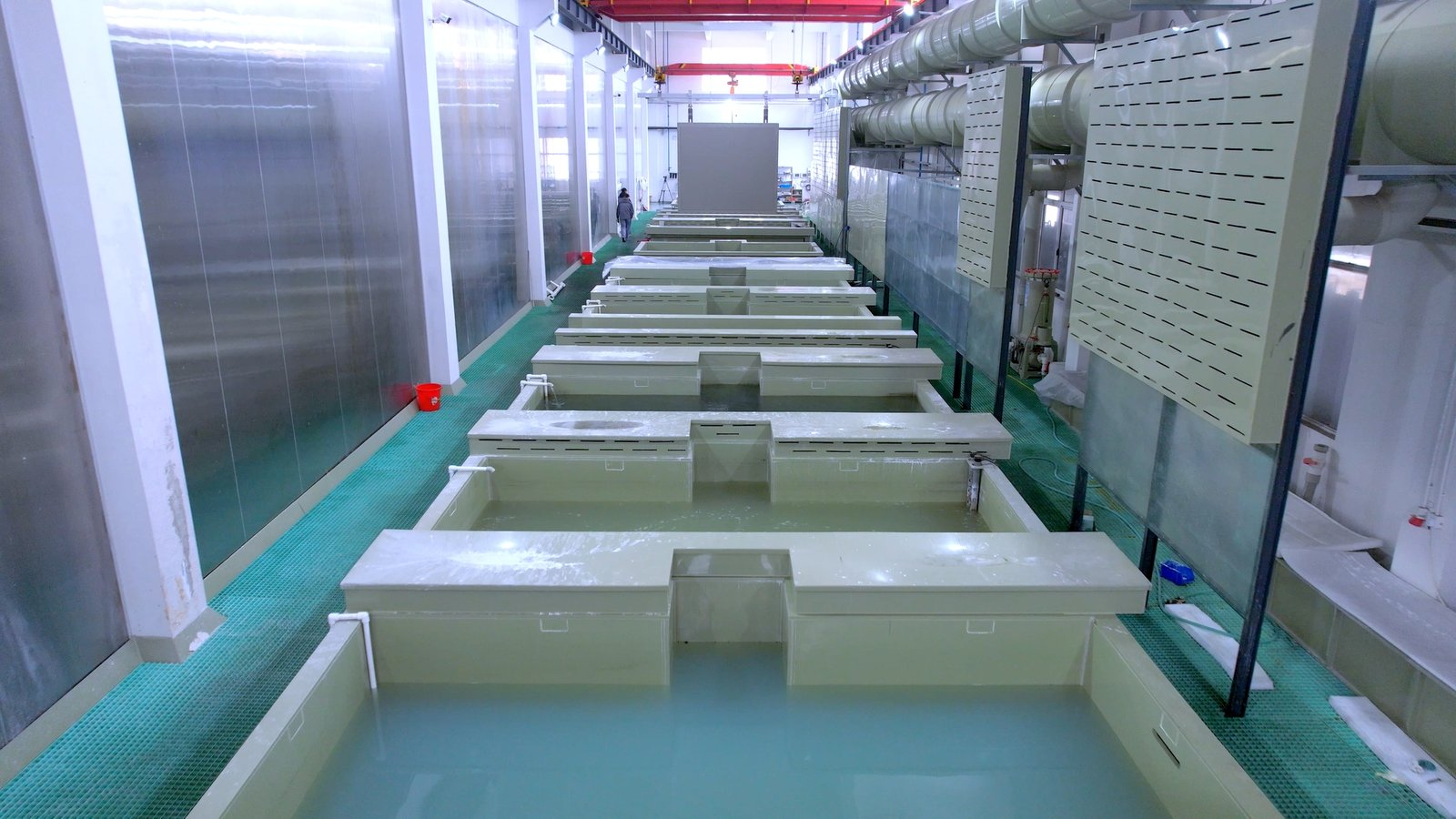
Electropolishing
Electropolishing can achieve an extremely smooth surface, around Ra < 0.2–0.4 μm (8–16 μin). This is also the most expensive surface finishing method. The high cost does not come only from the process itself, but also from pre-polishing, masking, custom electrodes, rinsing, cleaning, inspection, and possible post-treatment leak testing.
This is the best technique for demanding vacuum systems such as UHV, CVD, semiconductor, and other contamination-sensitive systems. To minimize unnecessary costs, specify electropolishing only where the performance justifies the cost.
Anodizing
Anodizing is mainly used on aluminum vacuum chambers to improve corrosion resistance, wear resistance, and electrical insulation. It does not directly target reducing surface roughness. The cost can be moderate to high depending on your requirements.
Hidden Surface-Treatment Costs of a Vacuum Chamber
Identifying where your vacuum chamber does and does not need smoother finishes, and specifying them only where functionally required, can significantly reduce surface-treatment-related costs.
Tighter Surface Roughness Ra Requirements
To reduce surface roughness from 0.8 μm to 0.2 μm, we need more than one finishing operation. In between these finishing steps, we also need to perform ultrasonic cleaning, neutralization, DI-water rinsing, inspection, and clean packaging of surfaces. These additional steps add labor, processing time, handling, and quality-control requirements, which increases your final vacuum chamber cost.
Treating Unnecessary Surface Area
Manual grinding and polishing of large internal chamber walls can be slow and labor-intensive. So, specify finer surface finishes only to critical vacuum-facing or process-facing areas. Unless you have a functional requirement, do not apply very low roughness requirements to an entire large chamber. You can use surface zoning to significantly reduce unnecessary finishing costs.
Complex Geometry and Difficult Access
Reaching deep cavities, internal corners, and narrow ports needs extra work. Your supplier has to design and manufacture custom electrodes and tooling that increase cost and setup time. Otherwise, deep or hidden areas may receive less treatment. So, follow proper vacuum chamber DFM guidelines and avoid unnecessarily complex chamber geometries.
Masking and Protection Costs
Electropolishing uses an acid solution, which can react aggressively with features like ConFlat knife edges, precision threads, and dowel locations. So, they need to be properly masked using acid-resistant materials before treatment. On a chamber with many ports and precision features, masking becomes a significant manual operation.
Cleaning, Inspection, and Re-Testing Costs
When the surface finish is critical, post-process inspection also becomes critical. To properly verify and approve a finished vacuum chamber surface, you need:
- surface profilometry at several internal locations,
- multi-stage vacuum chamber cleaning with deionized water,
- dimensional reinspection,
- cleanliness checks, and
- final helium mass spectrometer leak testing.
These verification steps add cost, but they are necessary when the surface specification is performance critical.
How to Reduce Cost Without Compromising Vacuum Performance
Using a zone-based approach to define surface requirements and following proper DFM guidelines in your chamber drawing can cut down many of the surface treatment costs. Recommended steps to reduce vacuum chamber surface finish costs:
- Zone your surface specifications – use tighter finishes only where the vacuum performance justifies them.
- Treat the sealing surface finish as a separate requirement – protect them from blasting or electropolishing processes that could damage their sealing geometry.
- Design for easier finishing – avoid unnecessarily sharp internal corners and surfaces that are hard to access. Use suitable internal radii, accessible ports, and geometries that allow polishing tools and cleaning fluids.
- Avoid cosmetic requirements on non-functional surfaces – do not specify mirror-bright external finishes that are not functionally needed.
- Account for material removal at the design stage – keep sufficient allowances for material removal during polishing and grinding. Otherwise, finishing operations can push critical dimensions outside tolerance.
- Design for complete fluid drainage – carefully design internal cavities, blind holes, and pockets so treatment fluids can drain completely.
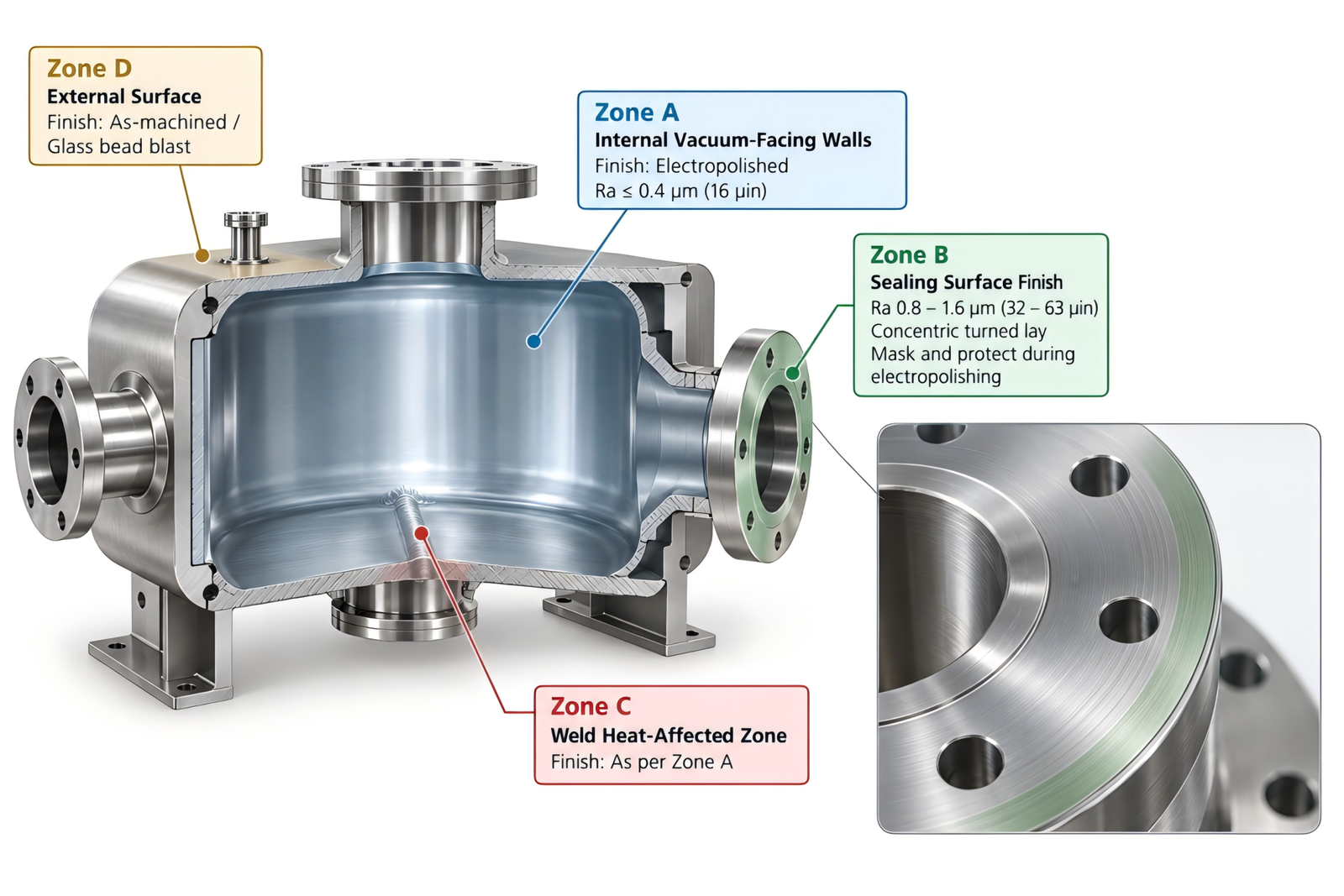
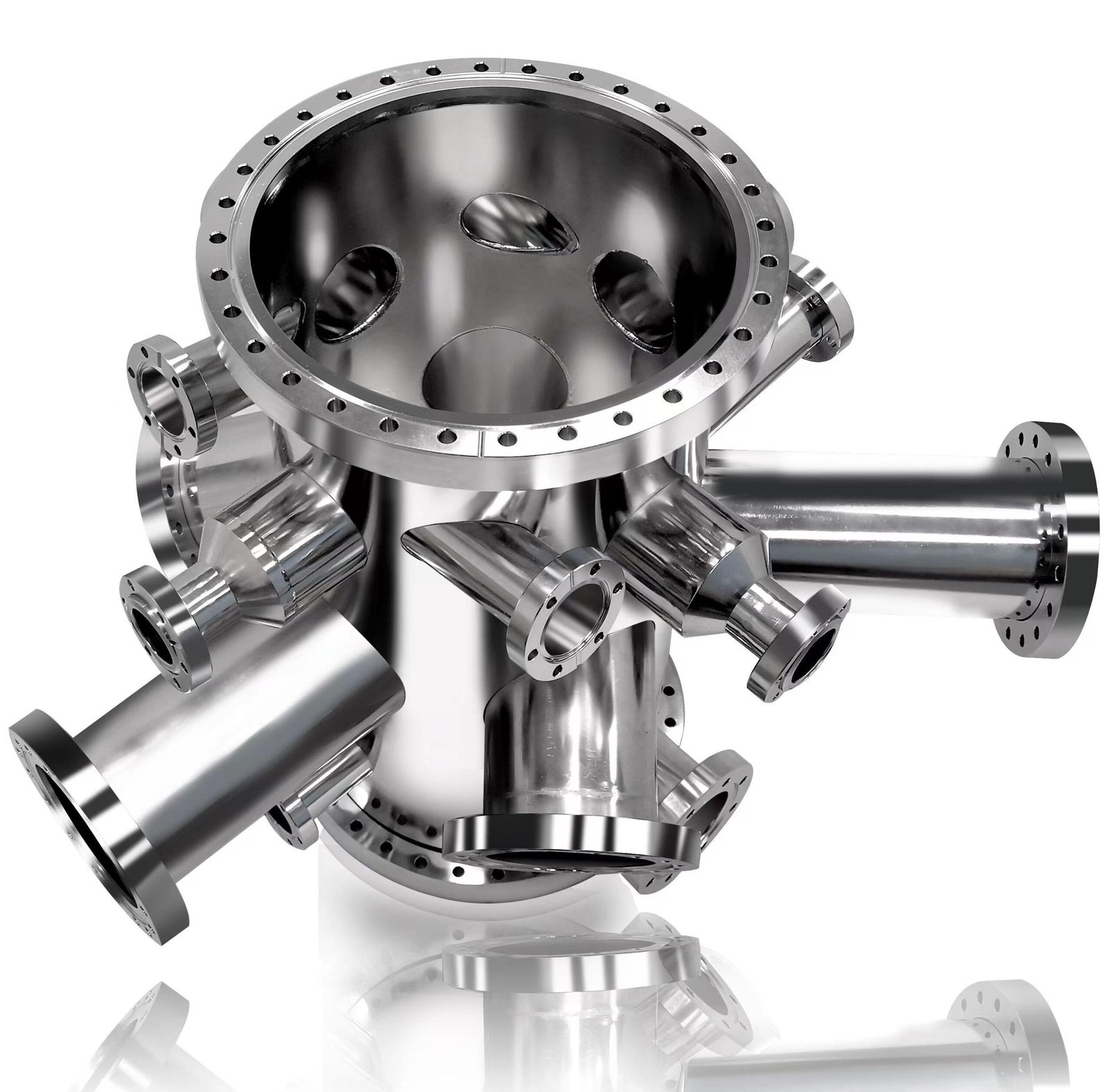
Figure 2: Functional Surface Zoning and Expected Surface Specifications in a Vacuum Chamber (Note: This is a sample illustration. To discuss exact specifications, consult your vacuum chamber supplier.)
Avoid Paying for Precision You Do Not Need
Over-specifying a surface finish adds unnecessary cost, while under-specifying it can reduce process reliability. The surface strategy should therefore match the actual vacuum application.
LAIKU supports a range of mechanical polishing, bead blasting, passivation, electropolishing, and other surface treatments for custom vacuum chambers. Tell us what the chamber needs to achieve, and we can help match the treatment to the application instead of over-processing the entire assembly.
FAQs
Does passivation reduce vacuum chamber surface roughness?
No. The main purpose of passivation is to improve corrosion resistance by supporting the protective oxide layer on stainless steel. You should choose mechanical polishing or electropolishing if a lower Ra is required.
Can I choose pickling to replace mechanical polishing?
No. Pickling does not produce a very smooth finish like polishing. You can use pickling to remove weld scale, oxides, free iron, weld discoloration, and a thin surface layer, but you'll need an additional finishing method if you also need to reduce surface roughness.
Will electropolishing change the final vacuum chamber dimensions?
It can, but usually only by a small amount. However, for precision features, you should keep a suitable machining allowance and account for the material removal before the final treatment.
Do I always need mechanical polishing before electropolishing?
It depends. Electropolishing is better at smoothing microscopic peaks but poor in correcting deep scratches. If your as-machined vacuum chamber surface is already smooth and free from deep irregularities, you may use electropolishing directly. But if your starting surface is too rough, you'll need mechanical polishing to remove larger defects first.