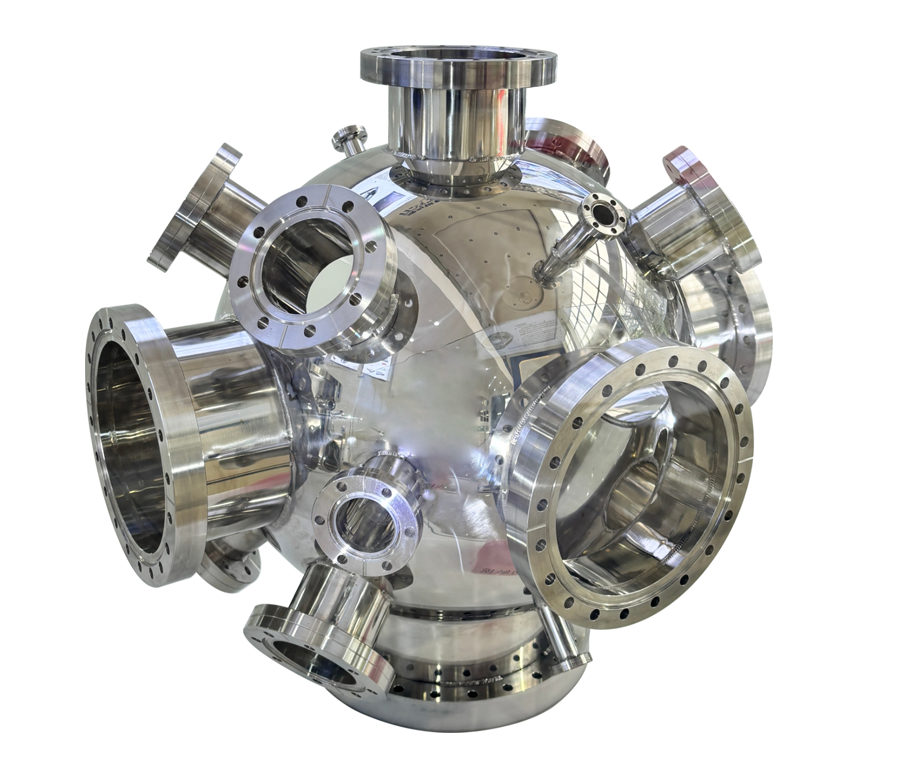

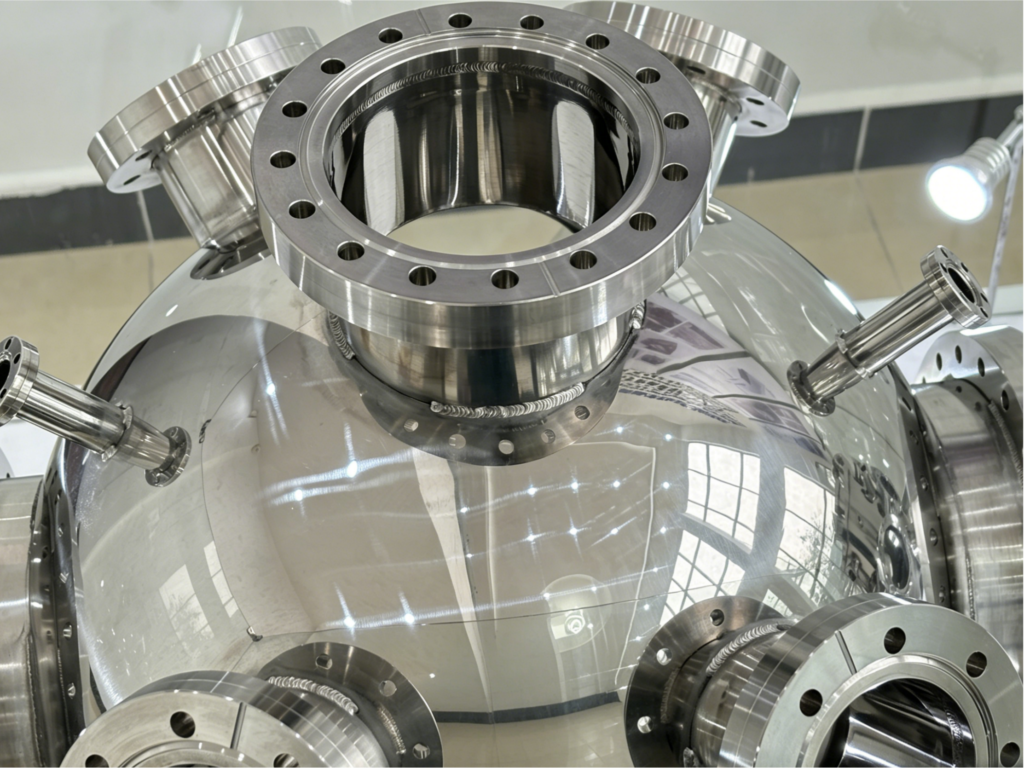
In high-tech manufacturing, precision research, and advanced industrial processes, a stable vacuum environment is critical. However, standard mechanical machining leaves microscopic imperfections that trap contaminants and gases.
Electropolishing solves this bottleneck. This electrochemical treatment smooths the inner walls, eliminates outgassing zones, and radically accelerates your pump-down times.
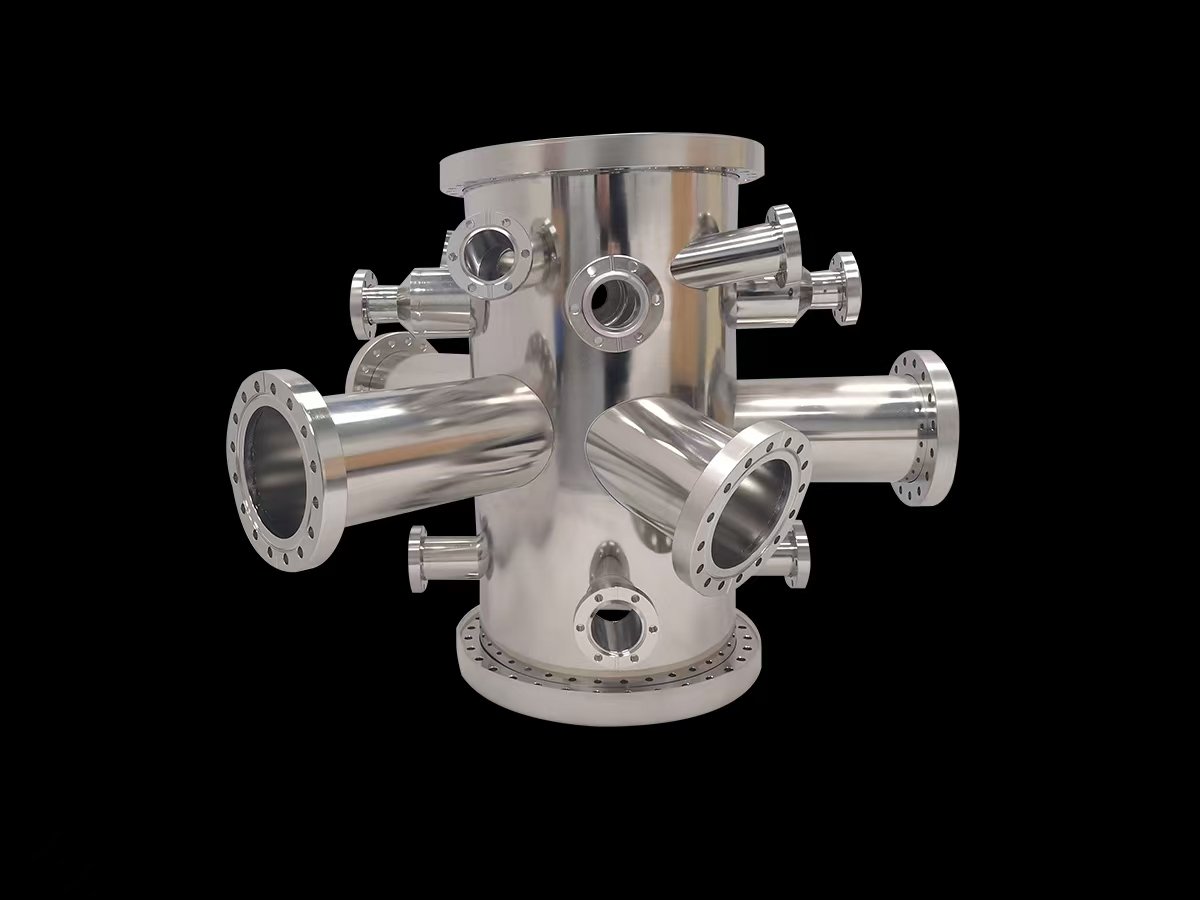
In this blog, we'll break down how electropolishing boosts vacuum chamber efficiency. Alongside this, we'll discuss how Laiku optimizes the electropolishing process to deliver peak performance for your ultra-high vacuum systems.
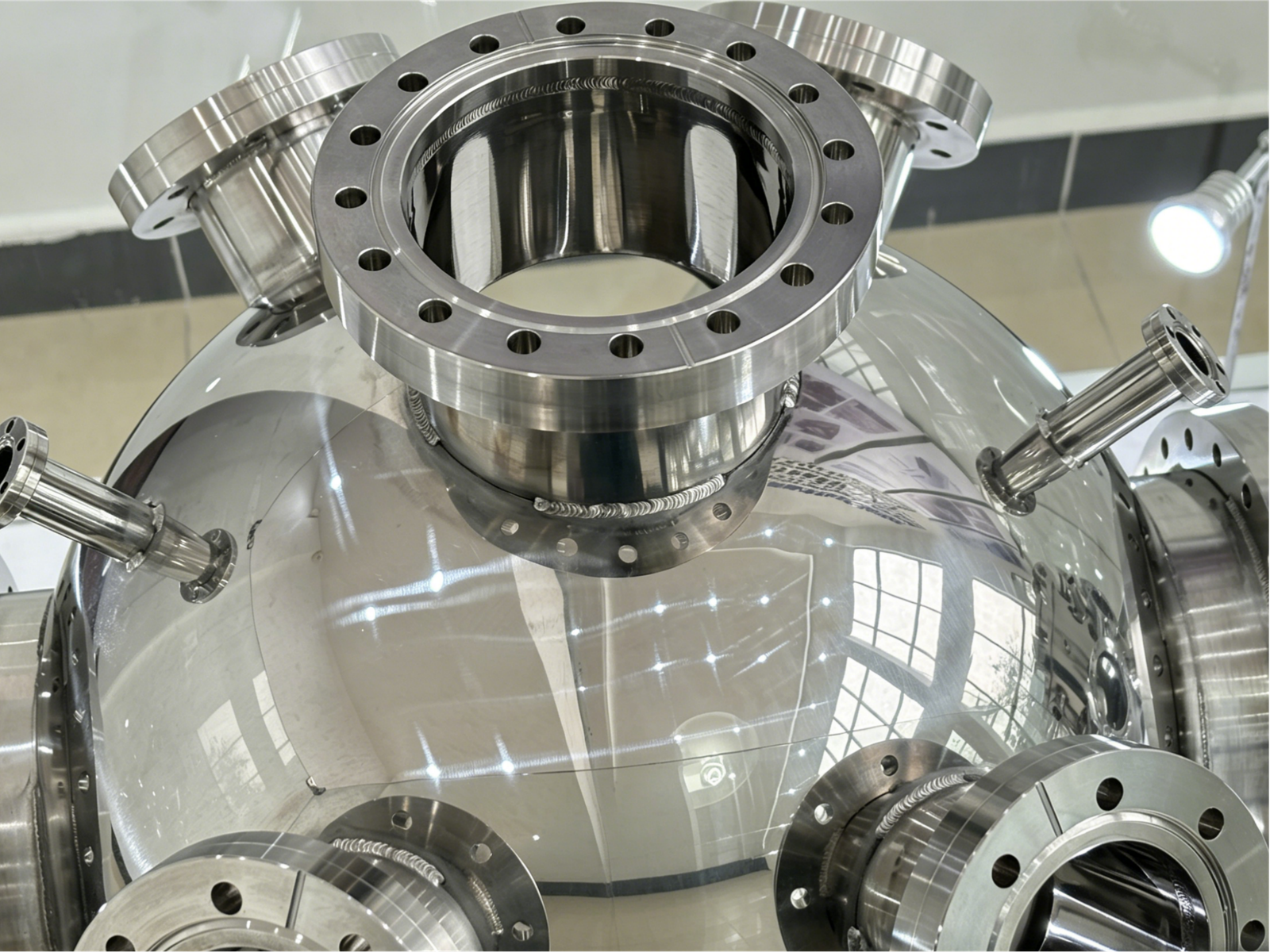
What is Electropolishing? A Brief Overview
Electropolishing is an electrochemical process that removes a microscopically thin layer of material from a metal surface. Think of it as the reverse of electroplating. Typically performed on stainless steel or aluminum alloy components, the process submerges the chamber into a temperature-controlled chemical bath while applying a direct electrical current (DC).
The chamber acts as the positive side (anode), while metal plates in the bath act as the negative side (cathode).
Because of how electricity flows, the current naturally targets the tiny microscopic "peaks" and rough spots on the metal surface, dissolving them away faster than the low "valleys."
4 Ways Electropolishing Maximizes Vacuum Chamber Efficiency
Integrating electropolishing into the manufacturing cycle of a vacuum chamber drastically improves its fundamental performance characteristics:
1. Radical Reduction in Outgassing Rates
Every material placed under low pressure releases trapped gas molecules. This is known as outgassing. Water vapor (H₂O), Carbon monoxide (CO), hydrogen (H₂), and various hydrocarbons adhere to the microscopic pores and rough crevices of untreated metal surfaces. Electropolishing dissolves these pores, reducing the microscopic surface area of the metal by up to 50% or more.
Now, there are fewer places for gas molecules to latch onto. This results in a significant drop in outgassing rates, enabling the system to reach deep vacuum thresholds effortlessly.
2. Drastically Accelerated Pump-Down Times
In manufacturing sectors like semiconductor lithography or thin-film deposition, throughput is strictly tied to cycle times.
Waiting hours for a chamber to evacuate slows down its operational efficiency. An electropolished chamber has clean walls that release gas quickly. This cuts down pump times and speeds up your manufacturing cycles.
3. Ultimate Control Over Contaminants and Particulates
Advanced microchip manufacturing requires a completely sterile environment. Mechanical polishing can leave behind tiny abrasive grains. Over time, these grains flake off into the chamber. Electropolishing eliminates these fragile burrs and loose crystalline structures. It also creates a thick, protective chromium oxide layer on stainless steel. This layer stops harsh process gases from corroding the metal.
4. Simplified Cleaning and Bakeout Efficiency
Chambers need regular high-heat "bakeouts" to drive out residual moisture and process byproducts. Electropolishing (Ra ≤ 0.4 μm to 0.2 μm) provides a mirror-like, ultra-smooth finish. This prevents process residues from bonding strongly with the chamber walls. This translates to faster bakeouts, less downtime for physical cleaning, and lower structural wear.
The Core Pillars of UHV Vacuum Chambers
While electropolishing optimizes the interior surface profile, a truly high-efficiency vacuum chamber requires a flawless manufacturing lifecycle—from raw materials to advanced structural welding and clean assembly.
To achieve ultra-clean environments reaching pressures of 10⁻⁷ Pa to 10⁻⁹ Pa, three critical technical factors must align with electropolishing:
-
Advanced Welding Technologies: Standard welding can leave micro-pores or air pockets. UHV chamber manufacturing uses internal TIG (Tungsten Inert Gas) welding to seal cracks. For large aluminum parts, Friction Stir Welding (FSW) is used. FSW joins metal without melting it, avoiding heat damage and leaks.
-
Tight-Tolerance CNC Machining: Flanges, seals, and O-ring grooves must fit perfectly to prevent outside air from leaking in. Precision milling ensures parts align with strict tolerances (down to ± 0.02mm). This results in creating an airtight seal that holds up against a leak rate lower than < 1 × 10⁻¹² Pa·m³/s.
-
Class 1,000 / Class 100 Cleanroom Assembly: Once a chamber is electropolished, human fingerprints, skin oils, or airborne dust can ruin it. Therefore, all final assembly, helium leak testing, and packaging must take place inside strict Class 1,000 to Class 100 cleanrooms to prevent any outside pollution.
High-End Vacuum Solutions: Our Technical Capabilities
At Laiku, we combine advanced surface treatments with world-class engineering. Our core technical team brings over 27 years of high-end vacuum welding experience.
We offer a complete, in-house manufacturing process designed to handle the strictest industry demands:
-
Ultra-High Vacuum Power: Our custom-built stainless steel and aluminum chambers reliably maintain ultra-clean vacuum levels. This ranges from 10⁻⁷ Pa down to 10⁻⁹ Pa. This makes them ideal for next-generation 7nm semiconductor manufacturing nodes and below.
-
Flawless Leak Prevention: Every chamber we build undergoes strict helium mass spectrometer testing. This guarantees an exceptionally low leak rate of < 1 × 10⁻⁹ Pa.
-
Expert Welding & Large-Scale Machining: Operating out of a temperature-controlled facility, we excel at advanced TIG welding and Friction Stir Welding (FSW). Equipped with massive gantry milling machines, we can build and process parts ranging from tiny components up to massive vacuum structures.
-
Certified Clean Delivery: From sandblasting and anodizing to specialized electropolishing and final assembly in our Class 10,000/Class 1,000/Class 100 cleanrooms, we ensure your equipment arrives completely clean and ready for immediate deployment.
Whether you are working in EUV lithography, thin-film deposition (PVD/CVD), ion implantation, or advanced laboratory research, Laiku delivers the precision and quality your business needs.
The Takeaway
Electropolishing is a vital engineering tool that decides the performance limits of your vacuum equipment. It lowers outgassing, speeds up pump-down cycles, and keeps particles out of your process.
Partnering with a specialized vacuum chamber manufacturer like Laiku ensures your chambers get the exact welding, machining, and finishing required for high-tech success. Visit szlksemi.com, reach out to our engineering team, and get a quote today.


喷淋电极板-scaled-e1787042008638.jpg)