
The semiconductor industry is all about precision manufacturing. The more advanced our technology becomes, the more complex the manufacturing process becomes. To manufacture semiconductor parts with high precision, we need greater control over the process. Today, we are going to discuss two such processes and compare 5-axis CNC Machining vs Traditional CNC for Semiconductor parts.
Understanding CNC Machining
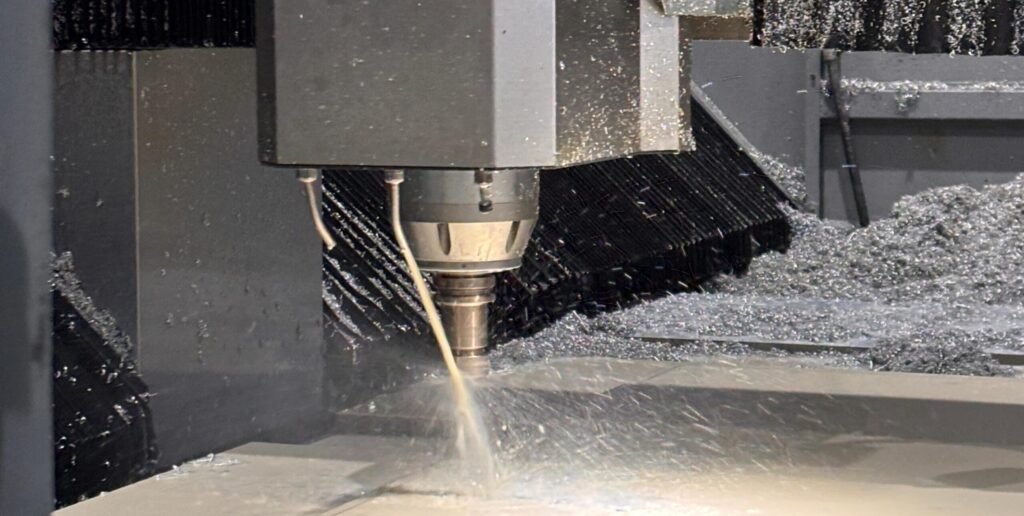
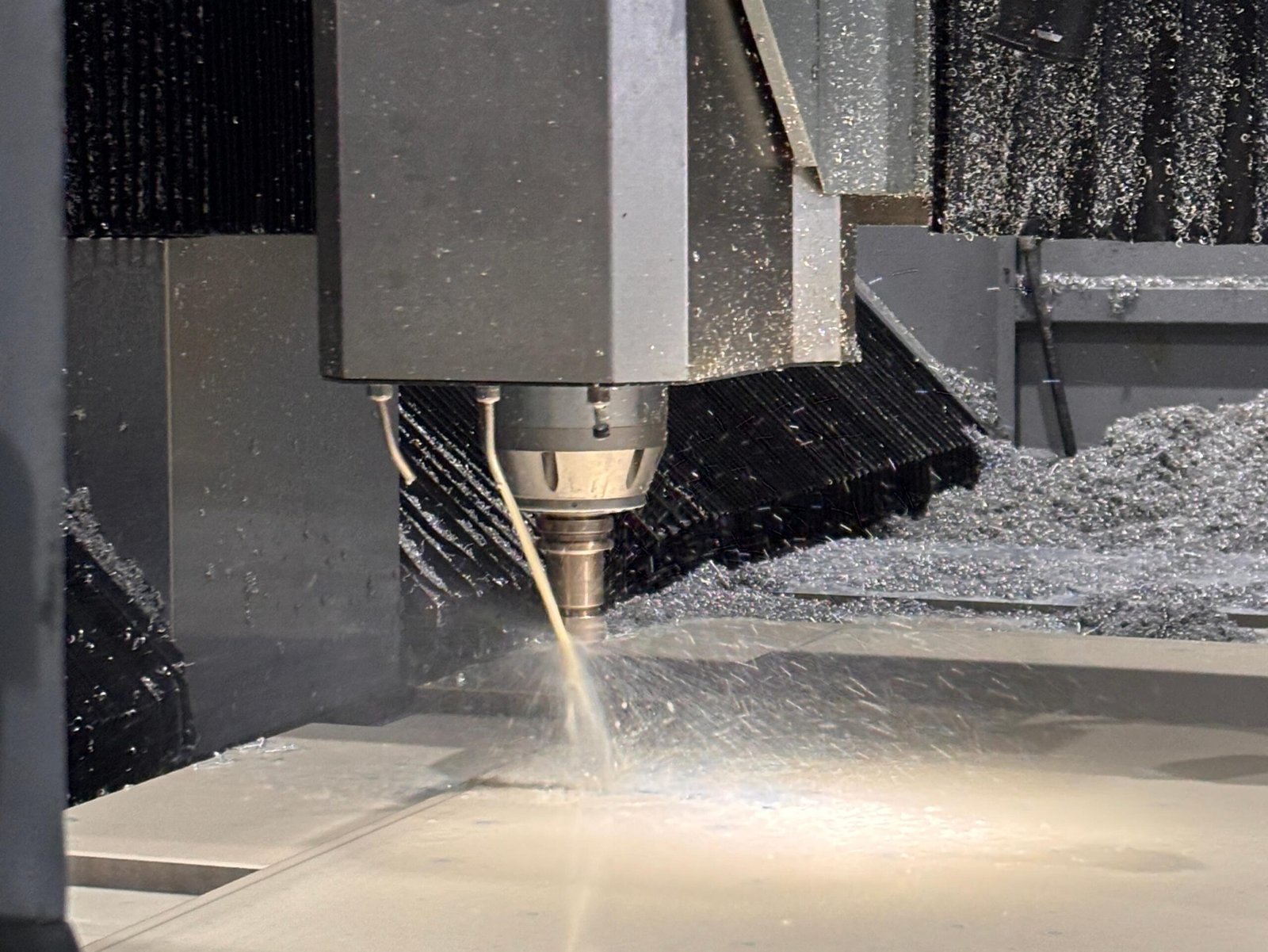
CNC Machining stands for Computer Numerical Control Machining. It is a manufacturing process in which a computer controls all machines to cut and shape a material into precise parts according to a design.
This is the modernized process where a mechanic uses different software to program the machines instead of doing the operations manually. The machines follow exact instructions and shape the parts like precision components, fixtures, tooling, vacuum chamber parts, wafer handling systems, and other structural equipment with high accuracy.
These are then used in semiconductor production facilities, and semiconductor parts are manufactured through lithography, etching, and deposition. There are several types of CNC Machining according to their movement.
A CNC Machine has axes like the X axis, Y axis, and Z axis, which define the directions it can move while shaping material into a part in the semiconductor industry.
Let's get to know about 2 types of them:
- 3-axis or traditional CNC Machining
- 5-axis CNC Machining
3-axis or Traditional CNC Machining
A 3-axis CNC is also considered traditional CNC machining, where it can move along 3 traditional axes: X, Y, and Z. The machines can move in left/right, forward/backward, and up/down directions. In traditional CNC Machining, the workpiece stays fixed in a place while the machine moves in 3 directions.
5-axis CNC Machining
Advanced semiconductor parts require more axes to create highly complex geometric shapes with accuracy. This is why 5-axis CNC Machining was programmed. This type of CNC Machining has 5 free directions of movement or 5 axes. These are 3 linear axes: X axis, Y axis, Z axis, and 2 rotational axes.
This allows the CNC Machine to move in left/right, forward/backward, up/down, and 2 rotational directions.
Overview: 5-axis CNC Machining vs Traditional CNC Machining
| Features | 5-axis CNC Machining | Traditional CNC Machining |
|---|---|---|
| Setup Requirement | single setup | multiple setups |
| Complexity Managing | High: can shape complex precision components | Low: can shape simple components |
| Production Speed | High: can create advanced parts very fast | Low: takes comparatively more time to create complex parts |
| Surface Finish | Superior | Comparatively good |
| Accuracy | Extremely high | high |
| Semiconductor use | Robotic parts and an advanced chamber | Basic plates |
| Cost | Higher for simple parts | Lower for simple parts |
Differences Between Traditional CNC and 5-axis CNC Machining
Setup Requirements Difference
Traditional 3-axis CNC Machining
This type of CNC machining is more time-consuming in terms of set-ups. Though it is fully computer-controlled, led from start to finish, it requires operators to manually reposition and clamp the complex workpiece several times.
As the machine can only move in X, Y, and Z axes, the parts may require repositioning mid-operation to give the CNC machine access to unreachable spots. This not only increases production time, but it also increases alignment risks and human error potential.
5-axis CNC Machining
As these machines can move in all 3 directions of the traditional CNC machines, and additionally have 2 rotational directions, it doesn't need any repositioning mid-operation. They automatically rotate and tilt the tools during operation.
The benefit of this CNC Machining is that it requires a single initial setup, and the operation is good to go. The production downtime is comparatively less in 5-axis CNC Machining.
Surface Finish Difference
Traditional 3-axis CNC Machining
A good surface quality is highly crucial in semiconductor manufacturing. A rough surface increases contamination risks by trapping particles. This affects vacuum performance. In Traditional CNC machining, surface quality is good on accessible surfaces.
Though these can only move in straight 3 directions, a ball nose 3-axis CNC Machine can shape curves with a good surface finish. However, they struggle with maintaining the surface finish consistency.
5-axis CNC Machining
As these have 2 rotational directions besides having 3 straight directions, 5-axis CNC Machining can maintain a good surface finish consistently in all areas. So, it provides a smoother surface finish on complex surfaces like curves.
The angle cuttings are more consistent as 5-axis CNC machining reduces vibration while machining. So, for a consistent, superior finish on complex geometries, 5-axis CNC Machining is preferred.
Accuracy and Cost Difference
Traditional 3-axis CNC Machining
Semiconductor Manufacturing always requires a micron-level of precision. In the case of simple parts, a traditional well-maintained 3-axis CNC machine is capable of ±5 micron precision.
However, the accuracy decreases during multiple setups or parts' repositioning over and over due to the machine's lack of rotation or tilting ability. So, for complex parts, there is an unavoidable cumulative alignment error.
The cost for traditional CNC Machining is comparatively lower for simple parts. For complex geometries, it can be costly per part as more setups are required then.
5-axis CNC Machining
On the contrary, 5-axis CNC machining provides better positional accuracy as no repositioning of parts is required here. The machine gives a 360-degree coverage of the semiconductor part by moving and rotating in all directions. Thus, it has almost zero cumulative alignment errors.
The cost for 5-axis CNC machining is naturally higher as it requires advanced programming and hardware design to operate. However, in the case of shaping complex geometries, it is comparatively cheaper than that of traditional 3-axis CNC Machines. Due to fewer step-up requirements for shaping a complex tool, a 5-axis CNC Machine is cheaper per part.
Production Speed Difference
Traditional 3-axis CNC Machining
Production speed depends on the complexity of the part to be manufactured. Simple parts production is fast in traditional CNC Machining. However, for complicated geometries, the production is slow as it requires multiple realignments or setups.
5-axis CNC Machining
In 5-axis CNC Machining, the production is fast for both simple and complex semiconductor components. As for this type of Machining, the operation stages are fewer, and manual handling is also minimal, making the overall production faster.
Semiconductor Applications
Traditional 3-axis CNC Machining
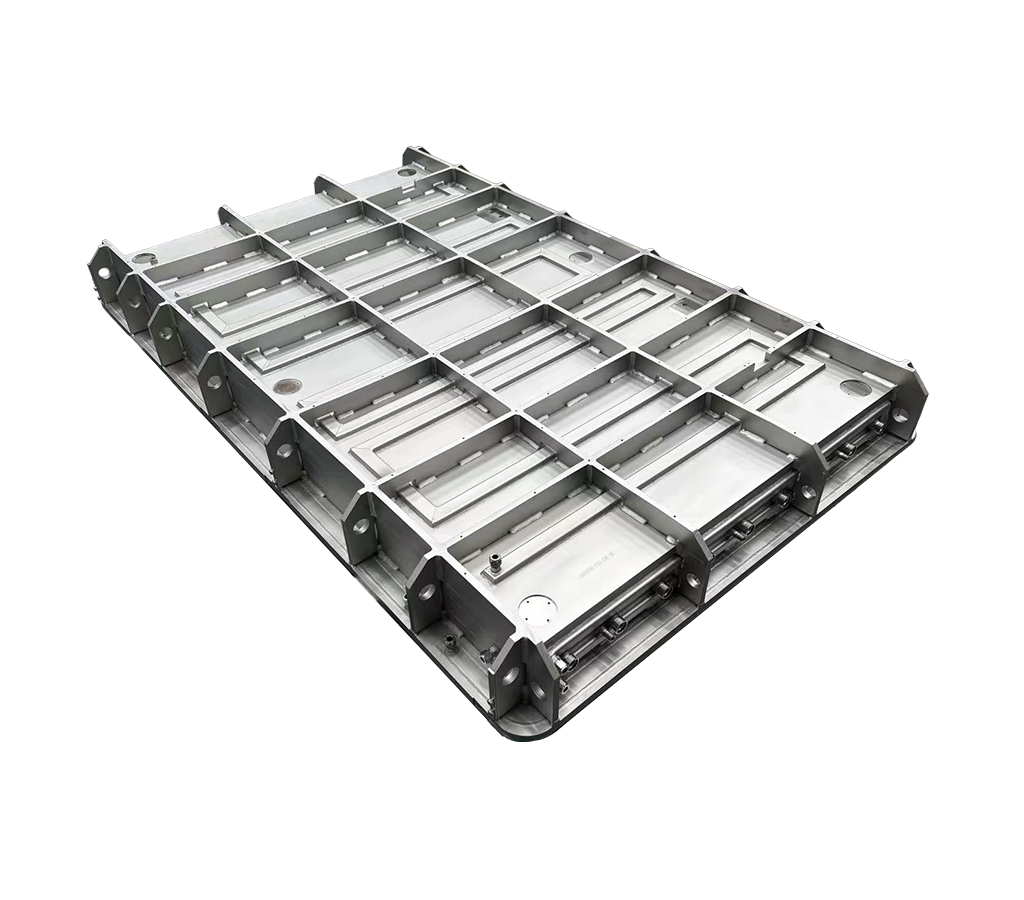
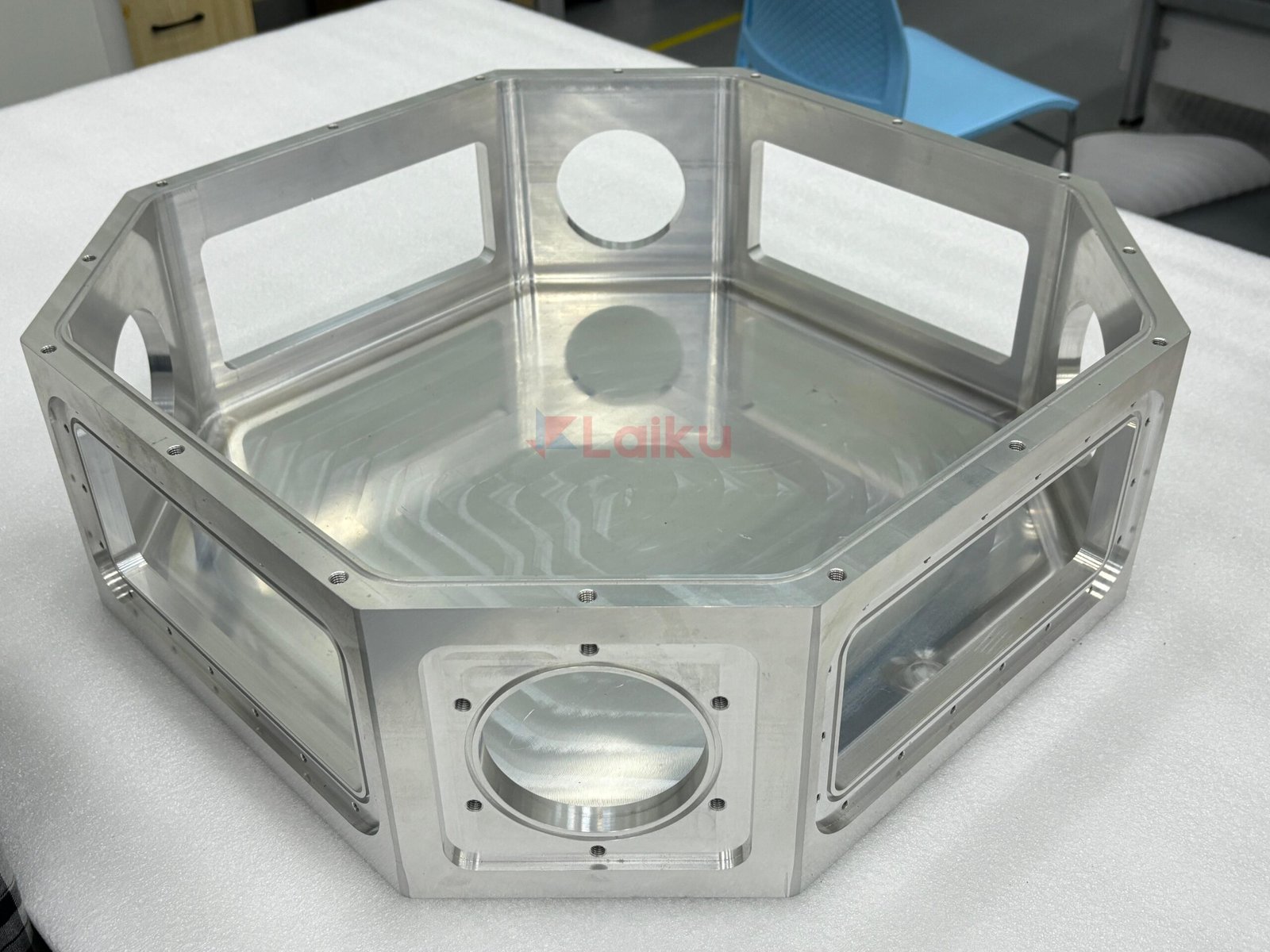
This type of machining is usually applied to simple parts of the semiconductor industry. For example: shape flat precision plates, heat sinks, simple vacuum parts, mounting brackets, enclosures, support fixtures for semiconductors, etc.
5-axis CNC Machining
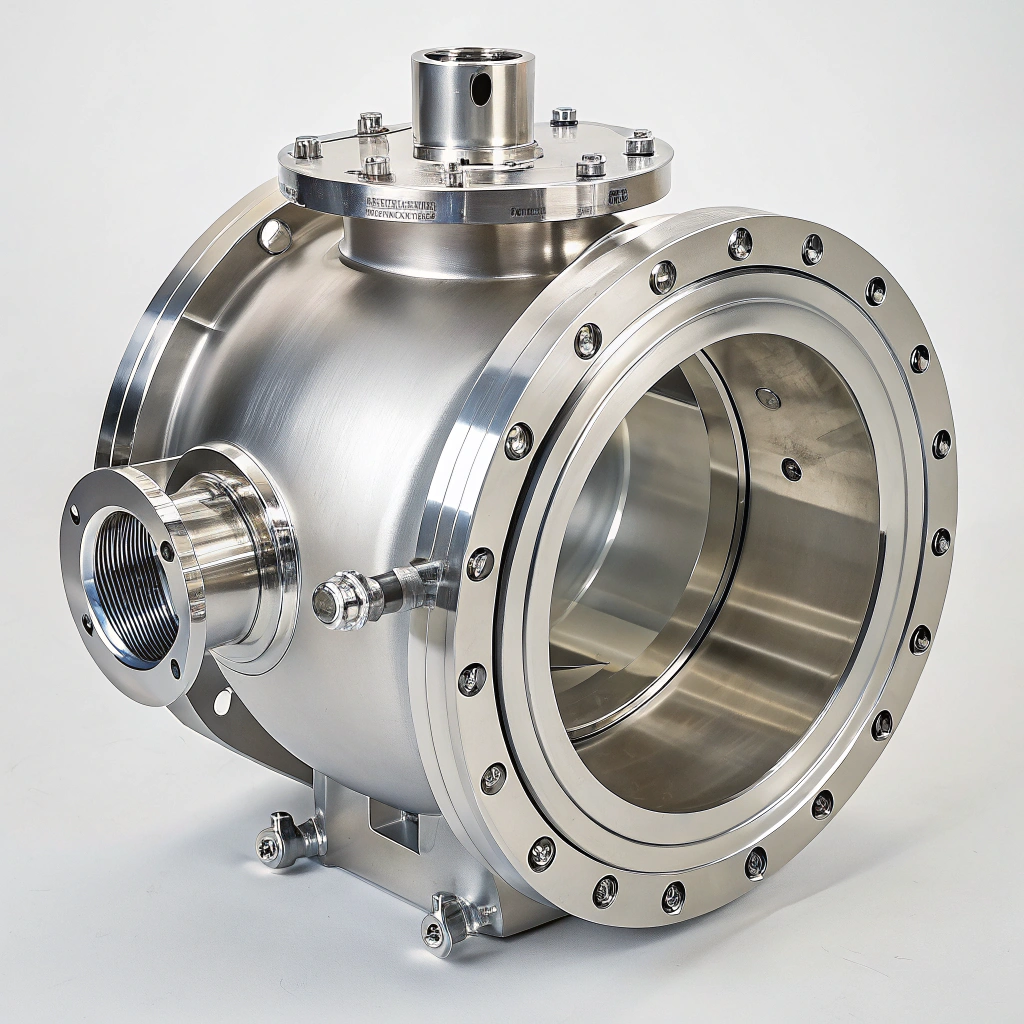
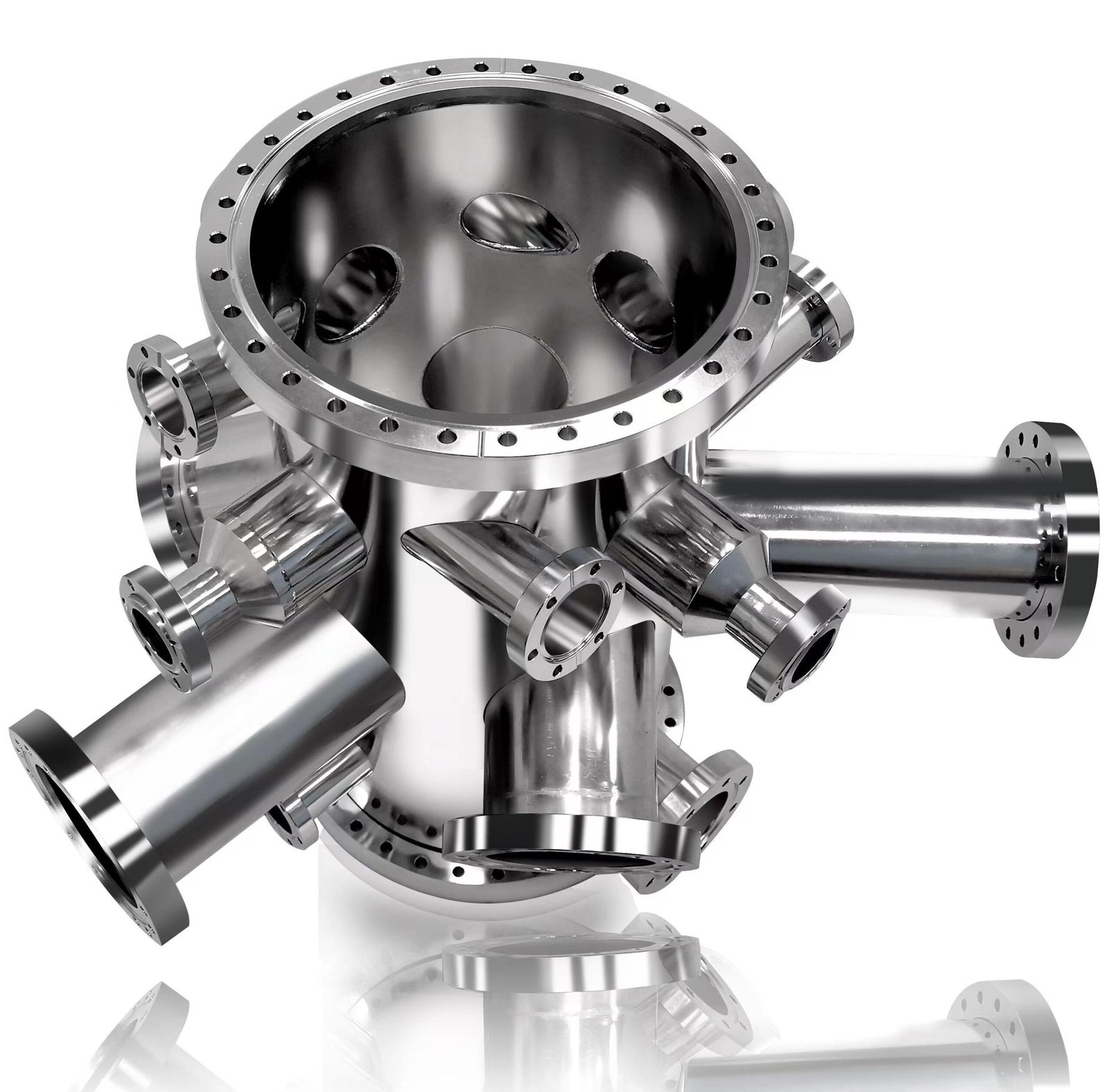
This type of CNC Machining is commonly used for complex parts requiring more movement for more precision. For example, components of vacuum chambers, robotic arm parts, wafer processing tools, complex manifolds, multi-surface tooling components, precision cooling systems, electrostatic chuck parts, multi-angle precision parts, etc.
Final Thoughts: Which CNC Machining is better?
From a comprehensive comparison between 5-axis CNC Machining and Traditional CNC Machining, we can understand which one is better in semiconductor parts manufacturing.
If you need to manufacture simple parts, 3-axis CNC machining is better for cost efficiency. On the other hand, despite 5-axis CNC machining being expensive, it's better for manufacturing advanced parts faster with more accuracy and control.
As semiconductor technology is becoming more sophisticated with time, the industry is evolving constantly and shifting toward more advanced 5-axis CNC Machining for higher precision and performance. It is being considered vital for manufacturing next-generation semiconductor equipment.