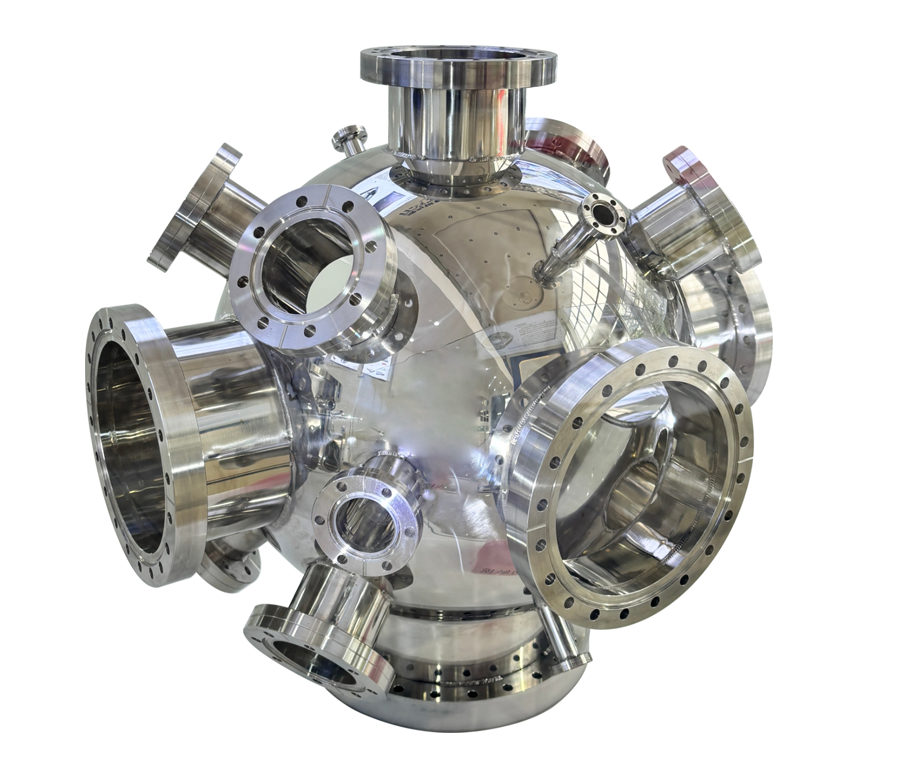

Has your vacuum chamber already passed helium leak testing, the pump is working normally, but your system still struggles to reach the required base pressure?
Then there's a high possibility that you're dealing with vacuum chamber outgassing. For engineers working with high-vacuum (HV) or ultra-high vacuum (UHV) systems, outgassing can be incredibly frustrating. But don't worry, this is a completely manageable issue once you identify it properly.
What Is Outgassing In Vacuum Chambers?
Vacuum chamber outgassing is the release of gases trapped within the chamber materials or the internal walls into the vacuum. When the pressure drops during pump-down, these trapped gases gradually escape from the internal walls and chamber components, increasing the gas load. As a result, your system will struggle to reach the desired vacuum level.
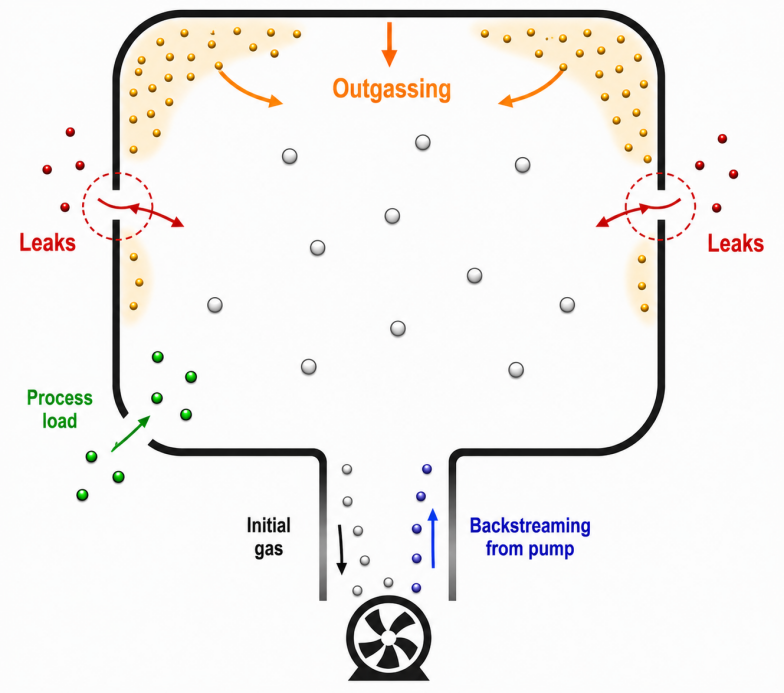
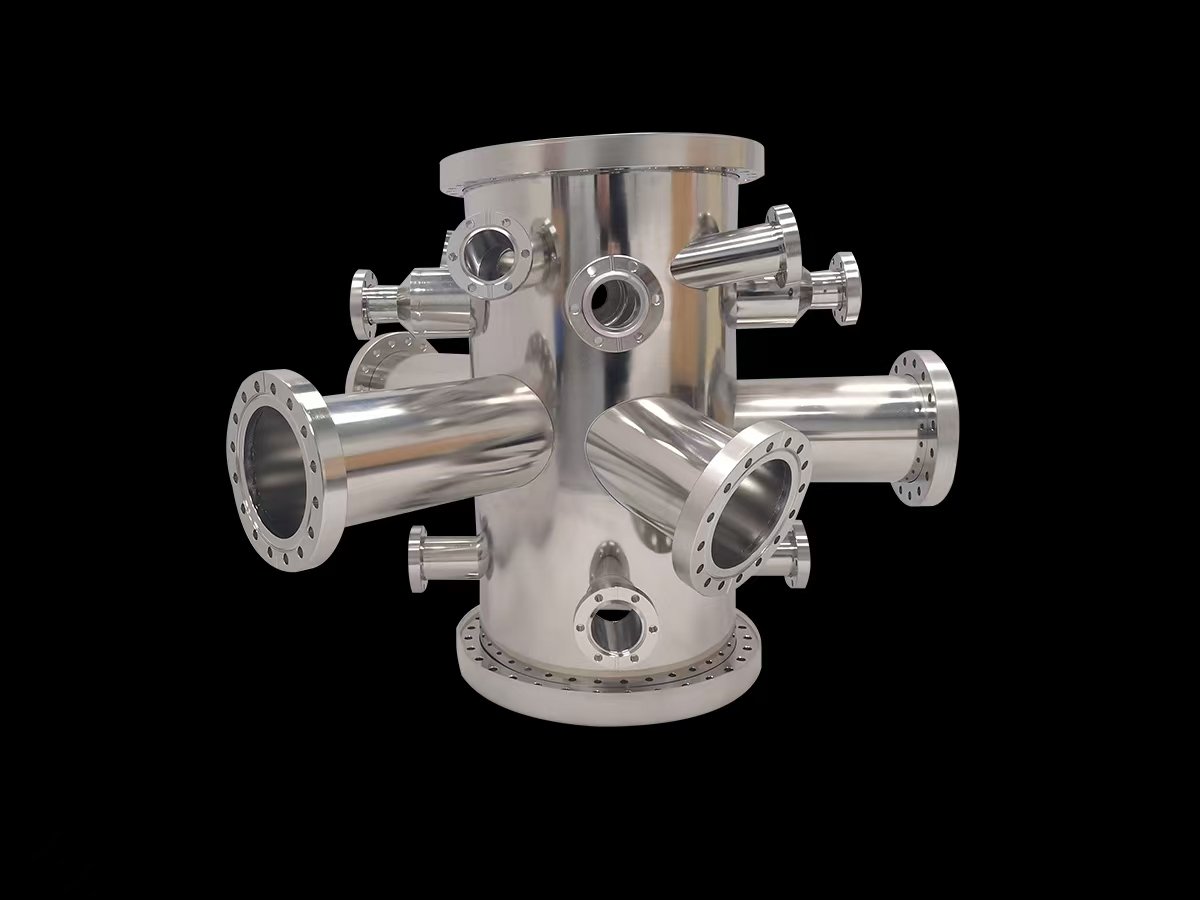
Figure 1: Outgassing in Vacuum Chambers
Most of the time, this outgassing compound is water vapor. Sometimes, other gases such as hydrogen, carbon monoxide, and hydrocarbons may also be released, depending on the chamber material and process conditions.
Vacuum Leak vs. Outgassing vs. Virtual Leak: What's the Difference?
These three terms can be very confusing, and many people mistake them for one another. All three phenomena add gas load to the chamber and prevent it from reaching the target pressure [1]. However, the root causes of these three are completely different, and you must clearly distinguish between them to find the correct solution.
-
Vacuum Leak – The inward flow of surrounding gases into the chamber through an opening. This can be caused by a damaged seal, a crack, a poor weld site, etc.
-
Outgassing – This happens entirely within the chamber. Gases trapped within the chamber materials are released into the vacuum during pump-down.
-
Virtual leak – This also happens within the chamber, but differs from outgassing. This is the release of air stuck between blind holes, overlapping joints, etc. into the chamber.
How Do You Know If Your Vacuum Chamber Is Outgassing?
If your vacuum chamber pressure is not dropping as expected and the pump-down time is unusually long, then you know there's either a vacuum leak, a virtual leak, or outgassing. The first step in determining the exact cause is performing a Rate-of-Rise (ROR) test.
Rate-of-Rise Testing
To perform the Rate-of-Rise (ROR) test, you should pump down the vacuum chamber to the lowest possible pressure. Then, isolate the vacuum chamber from the pump by closing the valve. Monitor the pressure increase in the isolated chamber over time, and you will get one of the three variations given below [2].
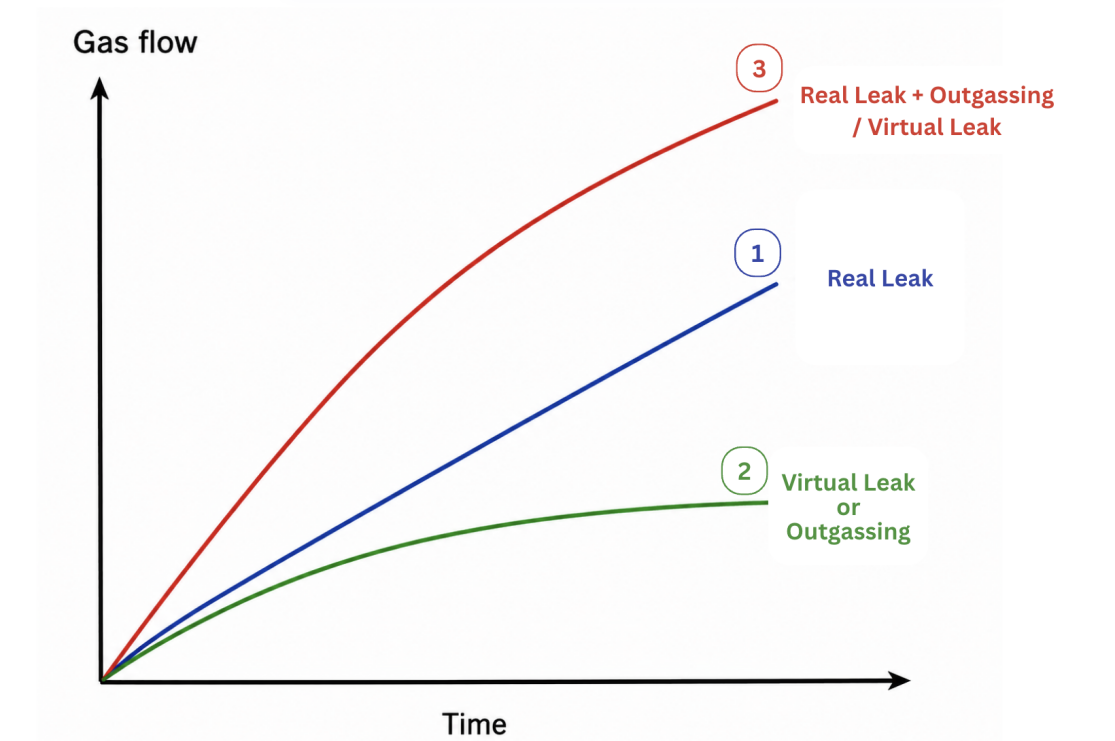
Figure 2: Rate-of-Rise Test for Determining Outgassing, Real Leaks, and Virtual Leaks
-
If there is a real leak, the pressure will increase continuously at an almost constant rate (approximately y=mx). This is because gas continuously enters the chamber through the leak.
-
If the pressure rises slowly and then begins to stabilize, it is due to a virtual leak or outgassing. Since both involve only a finite amount of trapped or stuck gas, the gas flow stops once it has been completely released.
-
If the pressure rises at a decreasing rate (curved profile) and eventually transitions to a linear increase, it indicates a combination of a real leak with outgassing or a virtual leak. This behavior is essentially the sum of Curves 1 and 2.
If you detect Case 1 or Case 3, first focus on repairing the real leak. Then, run another round of the ROR test to determine whether there is still a gas load. If so, you have to conduct several additional tests to determine whether the remaining gas load is caused by outgassing or a virtual leak (such as residual gas analysis (RGA) and mathematical analysis).
Residual Gas Analysis (RGA)
A Residual Gas Analyzer (RGA) can identify the exact gases present inside a vacuum chamber. It measures their mass-to-charge ratios and reveals the composition of the remaining gases. For example:
- If the majority of the gas is water vapor (mass 18) or a major solvent used in the process, the issue is most likely outgassing.
- If the composition is similar to atmospheric composition, it is mostly a leak.
- If you find any hydrocarbon or other peaks, they may indicate contamination-related outgassing.
Once you confirm that outgassing is the issue, you should look for the source of the outgassing and find suitable mitigation strategies.
Causes and Mechanisms of Vacuum Chamber Outgassing
Vacuum chamber outgassing occurs through four main mechanisms. In most cases, one mechanism is dominant, while the others may also be present.
| Mechanism | Description | Example |
|---|---|---|
| Surface Desorption | Release of the adsorbed gases on the internal surface of the chamber. | Water vapor adsorbed on chamber walls. |
| Diffusion | Release of gases trapped inside the bulk material. | Hydrogen diffusing from stainless steel. |
| Permeation | Some atmospheric gases pass through certain chamber materials and flow into the vacuum. | Air or water vapor permeating through O-rings and elastomer seals. |
| Vaporization | Volatile materials evaporate under vacuum and add up to the gas load. | Pump oils, greases, adhesives, and sealants. |
The exact mechanisms affecting your chamber depend on several factors, such as the chamber material, surface condition, temperature, and vacuum level.
How to Reduce Vacuum Chamber Outgassing
You cannot completely eliminate outgassing. But with proper material selection, cleaning, and additional treatments, you can minimize it to an acceptable limit that doesn't disturb the vacuum performance.
-
Choose low-outgassing materials – Use vacuum-compatible materials such as stainless steel, aluminum, and titanium whenever possible (especially for HV and UHV applications).
-
Clean all components thoroughly before assembly – remove machining oils, greases, fingerprints, dust, and other contaminants.
-
Perform vacuum bake-out – Bake-out is one of the most effective ways to reduce outgassing. By heating the chamber under vacuum, you can remove a significant amount of adsorbed gases.
-
Minimize the use of organic chamber materials – limit the use of plastics, adhesives, lubricants, and elastomers inside the chamber. These materials have high outgassing rates.
-
Maintain the chamber with proper practices – Keep the chamber closed whenever possible. Store cleaned components in a clean, dry environment.
Also, some newly assembled chambers may require longer pumping times. This is completely normal and they will settle down over time if no other issues are present.
Need a Custom Vacuum Chamber with Low Outgassing?
Preventing vacuum chamber outgassing starts during manufacturing. At LAIKU, every vacuum chamber is manufactured with the highest precision using advanced fabrication technologies. Each chamber is assembled in our ISO 5 (Class 100) cleanroom, helium leak tested, and undergoes advanced dimensional inspection and quality control before delivery.
Explore our product range and experience faster pump-down times with minimal outgassing.
Conclusion
Vacuum chamber outgassing is one of the main causes of a chamber not reaching the target pressure. Outgassing originates from within the chamber and its materials. If you identify outgassing, you should clearly identify the source and apply proper treatments before this inefficiency affects your entire production line. It's also important to choose an experienced manufacturer. A reliable supplier can minimize outgassing from the beginning and reduce many of your concerns later.
FAQs
How Can You Avoid Mistaking Outgassing for a Vacuum Leak?
Perform a Rate-of-Rise (ROR) test first to separate outgassing from real leaks. Then, you can continue with Residual Gas Analysis (RGA) mathematical analyses to identify the exact outgassing materials and their amounts.
What Materials Cause the Most Outgassing in Vacuum Chambers?
Plastics, elastomers, adhesives, lubricants, and other organic materials show very high levels of vacuum chamber outgassing. These materials are not recommended for ultra-high-vacuum applications used in sensitive fields such as semiconductor manufacturing and aerospace.
Does Baking Reduce Vacuum Chamber Outgassing?
Yes. Vacuum bake-out is the standard and the most effective method to remove adsorbed gases, especially water vapor.
How Long Does Vacuum Chamber Outgassing Last?
It depends on the material and vacuum conditions but decreases over time. It can last from hours to days.
References
-
B. Gu and X. Huang, "Investigation of leak detection method by means of measuring the pressure increment in vacuum," Vacuum, vol. 80, no. 9, pp. 996–1002, Jun. 2006, https://doi.org/10.1016/j.vacuum.2006.01.005
-
D. M. Hata, E. V. Brewer, and N. J. Louwagie, "Learning Activities 9.1–9.2: Pressure Rate-of-Rise Curves," in Introduction to Vacuum Technology. Geneseo, NY, USA: Milne Open Textbooks, SUNY Geneseo. [Online]. Available: https://milnepublishing.geneseo.edu/intro-to-vacuum-tech-lab/chapter/learning-activities-9-1-9-2-pressure-rate-of-rise-curves/


喷淋电极板-scaled-e1787042008638.jpg)